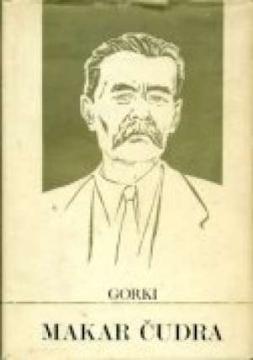
Makar Čudra

Makar Čudra

Maksim Gorki

And what Makar Čudra told him, and which is the subject of a great love story in this completely loveless story, is neither kitsch, nor is it folklorization of the Roma community based on the white idea of ​​romance, beauty and fatalism of gypsy life.

"Makar Čudra" (Russian: Makar Čudra) is a short story by the Russian writer Maxim Gorky. It was first published in the newspaper "Kavkaz" in September 1892. Gorky wrote the short story while he was employed in the Transcaucasian railway workshop in Tbilisi. It is considered the first literary achievement that the author signed with the pseudonym Gorky. The story was screened in the Soviet film musical "Gypsies fly to the sky" in 1975. The unnamed narrator meets Makar Čudra, an old gypsy, with whom he begins a conversation. Čudra begins to tell the story of the tragic love between the horse thief Lojko Zobar and the beautiful Rada. Although they spent passionate nights in an idyll, for them love becomes a shackle, which restrains their desire for freedom and independence, but also a training ground for proving superiority...

Übersetzung
Angelina Zubac, Mira Čehova, Vera Stojić
Editor
Izet Sarajlić
Titelseite
Mario Mikulić
Maße
21 x 17 cm
Seitenzahl
213
Verlag
Veselin Masleša, Sarajevo, 1969.
 
Latein Schrift. Fester Einband mit Schutzumschlag.
Sprache: Kroatisch.

Im Angebot sind keine Exemplare vorhanden

Das letzte Exemplar wurde kürzlich verkauft.
 

Interessieren Sie sich für ein anderes Buch? Sie können das Angebot über unsere Suchmaschine suchen und finden oder Bücher nach Kategorien durchsuchen.

Diese Titel könnten Sie auch interessieren

Moji univerziteti

Moji univerziteti

Maksim Gorki
Rad, 1959.
Serbisch. Latein Schrift. Taschenbuch.
0,99
Mati

Mati

Maksim Gorki

Maxim Gorky's novel "Mother" was published in 1906 and is one of the key works of Russian social realism. The work depicts the awakening of the working class in Russia through characters and events that emphasize social injustices and the need for revolut

Glas rada, 1950.
Kroatisch. Latein Schrift. Fester Einband mit Schutzumschlag.
4,36
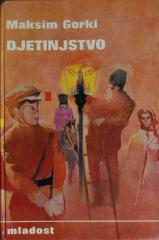
Djetinjstvo

Djetinjstvo

Maksim Gorki
Mladost, 1982.
Kroatisch. Latein Schrift. Hardcover.
2,99 - 3,98
Najljuća jela tatarske kuhinje

Najljuća jela tatarske kuhinje

Alina Bronsky

The main character, Rosa Ahmetovna, is an extremely self-centered, intrusive, tactless, sly and cunning narrator in this family saga by the author of the acclaimed novel "Scherbenpark" Alina Bronsky.

Naklada Ljevak, 2014.
Kroatisch. Latein Schrift. Taschenbuch.
21,34
Konačna dijagnoza

Konačna dijagnoza

Arthur Hailey

A look at the work of a modern day hospital through the lens of the pathology department.

Znanje, 1972.
Kroatisch. Latein Schrift. Fester Einband mit Schutzumschlag.
4,42
Doktor Živago 1-2

Doktor Živago 1-2

Boris Pasternak

One of the most significant works of 20th-century Russian literature, the novel follows the life of Yuri Zhivago, a physician and poet, through the dramatic events of World War I, the October Revolution, and the Russian Civil War.

Prosveta, 1962.
Serbisch. Kyrillisch Schrift. Fester Einband mit Schutzumschlag.
Das Buch besteht aus zwei Bänden
5,32