Miroslav Krleža
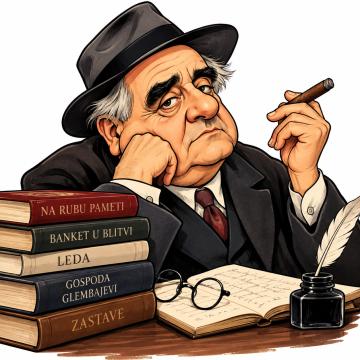
Miroslav Krleža (July 7, 1893 – December 29, 1981) was one of the most important Croatian writers of the 20th century – a poet, novelist, playwright, essayist and encyclopedist. He was born in Zagreb, educated at the Austro-Hungarian Military Academy, but quickly devoted himself to literature and intellectual activity. He was a strong critic of social injustice, petty bourgeoisie and political opportunism, which characterized much of his literature.
His work covers a wide range of genres. The most notable are the novel series about the Glembays (Gospoda Glembayev, U agoniji, Leda), and the epic novel The Return of Filip Latinovicz (1932). He also wrote essays, diaries, criticism, encyclopedic articles and poems such as those from the collection Pan.
Krleža's style is characterized by a rich vocabulary, complex sentences, intellectual depth and ironic distancing. He was a key figure in Croatian culture and one of the founders of the Lexicographic Institute (today LZ Miroslav Krleža). Despite political pressures, he remained faithful to intellectual autonomy.
Krleža's legacy is indispensable in the Croatian canon and indispensable in understanding modernity and the historical destiny of Croatia and Central Europe.
Titles in our offer
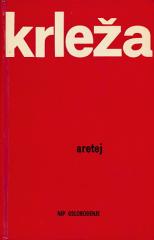
Aretej
Through the parallel destinies of an ancient and a modern physician, Miroslav Krleža’s late drama dissects the motif of the intellectual caught between political repression, the horrors of war, and his own conscience.
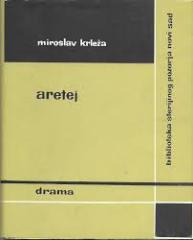
Aretej: drama
Krleža's drama with an extensive afterword by Branko Hećimović, biobibliographic contributions by Slavko Batušić and photos of scenes from "Areteja" performed by the National Theater, Belgrade.
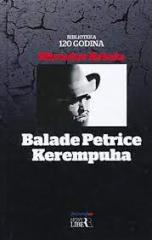
Balade Petrice Kerempuha
Najveće pjesničko ostvarenje Miroslava Krleže i jedno od najvažnijih djela hrvatske književnosti. Balade spajaju satiru, ironiju i lirsko-folklorne tonove u osudi nasilja i gluposti vlasti kroz stoljeća.
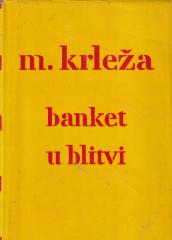
Banket u blitvi: Roman u tri knjige
Radnja je smještena u Blitvu, fiktivnu zemlju na sjeveroistoku Europe, koja je nakon stoljeća tuđinske vlasti i političke nestabilnosti postala samostalna država pod diktatorskom vlašću okrutnog poručnika Barutanskog.
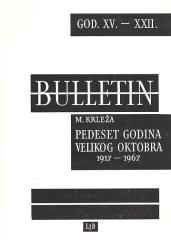
Bulletin - Pedeset godina Velikog oktobra 1917. - 1967.
U “Pedeset godina Velikog oktobra 1917.–1967.” Miroslav Krleža piše o Oktobarskoj revoluciji iz perspektive pisca koji joj je idejno blizak, ali koji se nikada nije suglasio s njezinim pretvaranjem u sustav rigidnih istina.

Članci i polemike 1: Ratne teme
Zbirka Krležinih publicističkih tekstova, komentara i analiza nastalih tijekom i neposredno nakon Prvoga svjetskog rata, važna za razumijevanje njegova intelektualnog razvoja i podloge za kasnija djela.
Članci i polemike 2: Sa uredničkog stola
Die Sammlung „Artikel und Polemiken 2: Aus der Redaktion“ umfasst Essays, Kritiken und polemische Texte, die während Krležas Tätigkeit als Herausgeber verschiedener Literaturzeitschriften wie Književna republika und Pečate verfasst wurden.
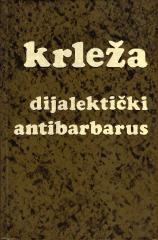
Dijalektički antibarbarus
Krležas berühmtester Streittext, in dem er den dogmatischen, vulgären Marxismus und die tendenziöse Literatur der Linken scharf angreift und die künstlerische Freiheit und intellektuelle Autonomie verteidigt. Der Höhepunkt des Konflikts in der literarisch
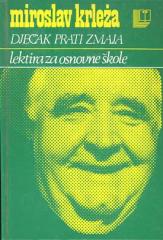
Dječak prati zmaja
"The Boy Follows the Dragon" is a book that takes us on a fantastic journey and encourages us to think about life and the world in a different way.
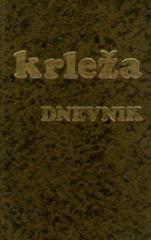
Dnevnik 1: Dnevnik 1914 - 17 (Davni dani I)
Dnevnik 1914–17 bilježi Krležine zapise iz Prvoga svjetskog rata: osobne dileme, pacifizam, sukob s militarizmom Monarhije te intelektualno sazrijevanje u godinama raspada staroga svijeta.