Osmi povjerenik

Osmi povjerenik

Renato Baretić

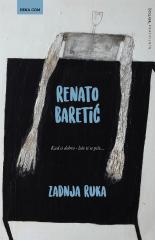
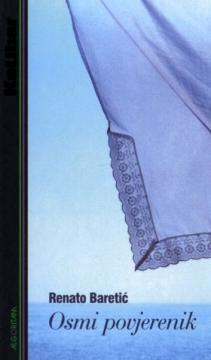
Renat Baretić's first novel, The Eighth Commissioner, takes us to the most remote inhabited Croatian island, Trećić. Having received awards K. Š. Gjalski, V. Nazor, A. Šenoa, I. G. Kovačić and "Kiklop" became the most awarded domestic book for the best pr

On Trećić, similar to Cicely from Life in the North, the community functions brilliantly without any authorities. That's why the eighth government commissioner appears there, as a punishment, with only one task: to organize elections and establish a legal local government. But everything is different on Trećić... First, people think differently there, and speak Trećić... And, on an island where mostly old people live, instead of a political thriller, a drama begins in which a Bosnian man, two Aboriginal women, a porn actress appear... Baretić's first novel - and a sure shot at the top of the charts and into the classics of our literary history - it is virtuosically written on as many as five language levels, of which at least four - almost polyglot - we understand, and we enjoy learning the fifth. But even more impressive than Baretić's mastery of language is his mastery of emotions, because joy and sadness in this novel are as inseparable as salt and sea. If the fifth partner was and remains the mystery and nausea of ​​domestic politics, the eighth commissioner is his sunny antipode: the demystification of the politics of self-knowledge. The eighth commissioner has only one flaw: Trečić is a utopia.

Editor
Kruno Lokotar
Illustrations
Maja Koljanin Eliat
Dimensions
21 x 13 cm
Publisher
AGM, Zagreb, 2003.
 
Latin alphabet. Paperback.
Language: Croatian.
ISBN
979-9-53174-201-5

One copy is available

Condition:Used, excellent condition
Specificity of this instance:
Dedication
 

Are you interested in another book? You can search the offer using our search engine or browse books by category.

You may also be interested in these titles

Pričaj mi o njoj

Pričaj mi o njoj

Renato Baretić

A novel about the chaotic Croatian post-war reality of the 90s, through which war heroes, profiteers, nimble mobsters and unfortunate victims of war parade.

Algoritam, 2014.
Croatian. Latin alphabet. Paperback.
8.42
Avlija

Avlija

Vasilije Kukić

The courtyard is a deep analysis of human relations in the Bosnian context, where Kukić explores the universal themes of love, freedom and morality through the prism of the community in the courtyard, with a strong sense of the local color and historical

Kosmos, 1963.
Serbian. Latin alphabet. Hardcover with dust jacket.
3.56
Devojka iz noćnog autobusa

Devojka iz noćnog autobusa

Jovan Maksimović
Kosmos, 1962.
Serbian. Latin alphabet. Paperback.
4.99
Očevi i kćeri

Očevi i kćeri

Robert Hellenga
Mozaik knjiga, 2000.
Croatian. Latin alphabet. Hardcover.
3.99
Pokojni Matija Pascal

Pokojni Matija Pascal

Luigi Pirandello

Luigi Pirandello's novel The Late Matthias Pascal (1904), a masterpiece of Italian literature, explores themes of identity, freedom, and social conventions through a tragic yet ironic story of a man trying to escape his life.

Naprijed, 1962.
Croatian. Latin alphabet. Hardcover.
4.50
Ljepuškasta djeca

Ljepuškasta djeca

Jiří Šotola

The novel Beautiful Children depicts the world of adolescent rebels in a "re-education" colony - a prison disguised as a school. Written in the spirit of the Prague Spring, the work criticizes the communist system through a dynamic, cinematic narrative.

August Cesarec, 1986.
Croatian. Latin alphabet. Hardcover with dust jacket.
4.82 - 4.84