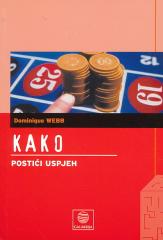
Moralni kapitalizam: mirenje privatnog interesa s javnim dobrom

Moralni kapitalizam: mirenje privatnog interesa s javnim dobrom

Stephen Young

Knjiga se bavi razmatranjem mogućnosti pomirenja privatnih interesa i javnog dobra u zadanoj paradigmi globalne ekonomije i na tragu univerzalnih CRT načela društveno odgovornog poduzetništva.

Its author is the CEO of the Caux Round Table, a network of the most influential global industry leaders, and as a professor of commercial law he was dean of Hamline School of Law and vice dean of Harvard Law School. The book represents a radical departure from the apologetic reading of the social-Darwinist understanding of capitalism, with the aim of providing the reader with a reliable moral compass for their own judgments and decisions about managing themselves and leading others in real business life. It considers the fundamental principles of socially responsible entrepreneurship and sustainable business development based on the assumption of professional and ethical responsibility of company managers. With its content, it fits perfectly into the current reflections on the National Standards of Corporate Governance and our discussions on the development strategy of the Croatian economy and civil society. In the part where the principles of business ethics are explained and exemplary solutions for company codes of conduct are given, the book will be a valuable advisor to everyone who understands that the concept of brutal, corrupt and socially irresponsible capitalism is not a good path in the 21st century.

Original title
Moral capitalism
Translation
Davor Gvozdić
Editor
Marina Juranić
Illustrations
Boris Kragić
Graphics design
Boris Kragić
Dimensions
23 x 15.5 cm
Pages
228
Publisher
CROMA, Zagreb, 2006.
 
Latin alphabet. Paperback.
Language: Croatian.

No copies available

The last copy was sold recently.
 

Are you interested in another book? You can search the offer using our search engine or browse books by category.

You may also be interested in these titles

Kapitalistička revolucija: Pedeset postavki o blagostanju, jednakosti i slobodi

Kapitalistička revolucija: Pedeset postavki o blagostanju, jednakosti i slobodi

Peter L. Berger

Peter L. Berger's book is a sociological analysis of capitalism as a cataclysmic force in modern society. Berger's thesis is that capitalism is not just an economy, but a revolutionary process that changes the material, social, political, and cultural asp

Naprijed, 1995.
Croatian. Latin alphabet. Paperback with dust jacket.
9.56
Put do slave i bogatstva

Put do slave i bogatstva

Anđelko Brezovnjački

The secret to the success of the world's leading managers

Profil Knjiga, 2009.
Croatian. Latin alphabet. Paperback.
12.46
Položaj i problemi porodice u procesu konstituisanja samoupravnog socijalističkog društva

Položaj i problemi porodice u procesu konstituisanja samoupravnog socijalističkog društva

It presents a collection of papers that analyzes the role and challenges of the family within the then Yugoslav society based on self-government.

Institut za političke studije, 1968.
Croatian. Latin alphabet. Paperback.
6.16
Ovo mijenja sve: Kapitalizam protiv klime

Ovo mijenja sve: Kapitalizam protiv klime

Naomi Klein

In her most provocative book yet, Naomi Klein, author of the influential bestsellers "No Logo" and "The Shock Doctrine," explores the greatest threat humanity has ever faced: the war that the existing economic model is waging against life on Earth.

V.B.Z, 2015.
Croatian. Latin alphabet. Paperback.
11.48
Ekonomika kulturne politike

Ekonomika kulturne politike

David Throsby

Cultural policy is changing. Initially, it was concerned with ensuring financial support for institutions such as museums and galleries, arts and cultural values.

Multimedia Clio, 2012.
Serbian. Latin alphabet. Paperback.
15.98
Vodič za novi svijet: Zašto je uzajamno jamstvo ključ našeg oporavka

Vodič za novi svijet: Zašto je uzajamno jamstvo ključ našeg oporavka

Anatolij Uljanov, Michael Laitman

Why do 1% of the world's population own 40% of the wealth? Why do education systems around the world produce unhappy, poorly educated children? Why is there hunger?

Antibarbarus, 2013.
Croatian. Latin alphabet. Paperback.
11.42