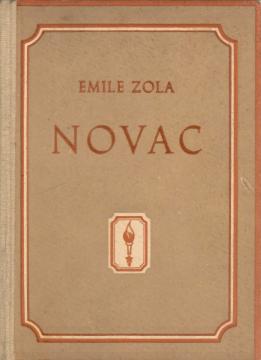
Novac
Money depicts the rise and fall of financial speculator Aristide Saccard, whose immoderate ambition, greed, and manipulation lead to a spectacular banking collapse and expose the fatal power of capital over people.
Money is one of Zola's key novels from the Rugon-Macquart cycle, dedicated to the critique of modern capitalism and financial speculation. At the center is Aristide Saccard, a relentless, charismatic and morally unbridled entrepreneur who, after previous failures, returns to Paris with a new plan. He establishes the "Universal Bank", conceived as a huge financial monster that will connect colonial projects, transport networks and state investments. Thanks to his persuasiveness and ability to manipulate, Saccard gathers investors, politicians, dreamers and adventurers around him, creating an atmosphere of false progress and excessive euphoria.
Zola shows in detail the mechanisms of financial fever: artificially inflating stocks, concealing losses, corruption and the intertwining of capital with politics. In the background, human destinies intertwine – from poor small investors who invest their life savings in the bank to ambitious officials and opportunists who seek their share of the pie. Saccard's anti-Tul character, the idealistic financier Gundermann, embodies the more cautious and rational side of capital, creating a moral and intellectual contrast to the protagonist.
As the illusions pile up and the financial structure begins to crack, the novel turns into a chronicle of unstoppable collapse. In true naturalistic spirit, Zola exposes the psychology of greed, shows how the system itself encourages vices, and how bankruptcy affects not only those at the top but also thousands of anonymous individuals.
Money is simultaneously a social analysis, a psychological drama and a warning about the destructive nature of unbridled capital, and its relevance remains strong even today.
One copy is available