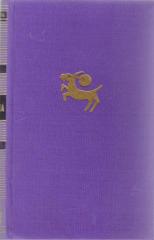
Lurdsko čudo
Rare book
Antique

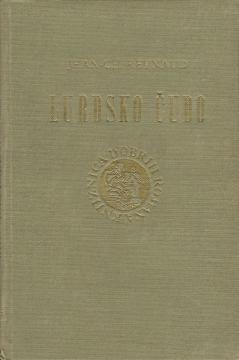
Lurdsko čudo

Jean-Charles Reynaud

The Miracle of Lourdes is the story of a sick child and his mother who seek healing in Lourdes. Through the tension between faith and doubt, a moving story of grace, hope, and inner transformation is formed.

1,512 The Miracle of Lourdes by Jean-Charles Reynaud is a short, emotionally powerful story set in the atmosphere of the shrine in Lourdes, a famous place of prayer and pilgrimage. It centers on the relationship between a seriously ill child and his mother who, tormented by despair and uncertainty, decides to make a pilgrimage to Lourdes, hoping for the grace that medicine can no longer offer. Reynaud sets up a contrast from the very first pages: on the one hand, the child’s innocence and the mother’s unwavering love, and on the other, the harsh reality of illness and the fear of loss.

Through encounters with other pilgrims, volunteers and priests, the story develops a broad picture of human suffering and hope. The characters have different attitudes: some come with deep faith, others doubt or desperately seek a last chance. In this multitude of human destinies, Reynaud depicts Lourdes as a place where the physical and the spiritual collide: alongside medical examinations, prayers and processions, the most important changes take place within the human heart.

The author presents the moment of the miracle itself with restraint and without dramatization. More than physical healing, the emphasis is on the mother's inner peace, the return of trust, and the healing of the family relationship. The miracle is presented as a moment of grace that transcends rational explanation — something that is born of deep faith and devotion.

Reynaud's style is simple, warm, and full of compassion. The Miracle of Lourdes therefore remains a moving work of Christian literature that highlights the power of maternal love, the value of hope, and the possibility of spiritual renewal in moments of greatest human fragility.

Original title
Le miracle de Lourdes
Translation
Eugenija Šah
Editor
Josip Andrić
Dimensions
19.5 x 12.5 cm
Pages
87
Publisher
Knjižnica dobrih romana, Zagreb, 1930.
 
Latin alphabet. Hardcover.
Language: Croatian.

One copy is available

Condition:Used, excellent condition
 

Are you interested in another book? You can search the offer using our search engine or browse books by category.

You may also be interested in these titles

Šinjel i druge pripovijetke

Šinjel i druge pripovijetke

Nikolaj Gogolj

The story of Gogol is a story of tragic talent, mysticism and madness, of a manuscript that burned, of a nose and an overcoat, of an auditor and dead souls.

Civitas, 2004.
Croatian. Latin alphabet. Paperback.
6.48 €
Bosonogo djetinjstvo: Sabrana djela Branka Ćopića #10

Bosonogo djetinjstvo: Sabrana djela Branka Ćopića #10

Branko Ćopić

Stories of a ravishing boy - Donkey years - Stories of a partisan - Daring stories

Prosveta, 1964.
Serbian. Latin alphabet. Hardcover.
2.98 €
Inšallah Madona, inšallah

Inšallah Madona, inšallah

Miljenko Jergović

Inšalh, Madonna, Inšalah by Miljenko Jergović is a collection of stories whose richness of motifs and emotions branches out like carved ivory – in each story a story, in each destiny an entire world.

Durieux, 2004.
Croatian. Latin alphabet. Paperback.
16.32 €
Sabrana djela IX: Znakovi - pripovetke

Sabrana djela IX: Znakovi - pripovetke

Ivo Andrić

This collection brings together a number of Andrić's shorter works that deal with human destinies, historical and social circumstances, and universal issues of human nature.

Svjetlost, 1977.
Serbian. Latin alphabet. Hardcover.
4.38 €
Selo Stepančikovo

Selo Stepančikovo

Fjodor Mihajlovič Dostojevski

"The Village of Stepanchikovo" is a humorous novel by Dostoyevsky, first published in 1859. This novel, which differs from the later, darker works of the author, is a satirical critique of social relations and human weaknesses.

Svjetlost, 1962.
Serbian. Latin alphabet. Paperback.
4.22 - 4.76 €
Svetlosti Rima

Svetlosti Rima

Alberto Moravia

Through these stories, Moravia explores themes of social inequality, the struggle for survival, and human frailty, portraying them with a mix of humor, irony, and realistic observation.

Svjetlost, 1965.
Serbian. Latin alphabet. Paperback.
3.82 - 3.92 €