Palača cara Dioklecijana u Splitu
Antique
Rare book

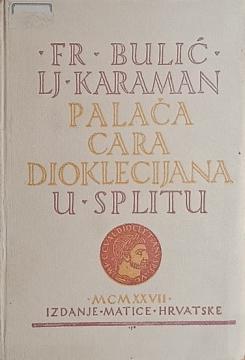
Palača cara Dioklecijana u Splitu

Frane Bulić, Ljubo Karaman

The work of Bulić and Karaman depicts the creation and development of Diocletian's Palace in Split, its historical transformation and significance as a monument of Roman architecture and later an urban center.

Frane Bulić as the author and Ljubo Karaman as a collaborator in writing the work The Palace of Emperor Diocletian in Split, have created one of the most important scientific studies on late antique architecture on the eastern Adriatic coast, which has remained meritorious in its field to this day.

The authors analyze the emergence of the palace of the Roman emperor Diocletian in the late 3rd and early 4th centuries, when the complex was built as a luxurious imperial residence and at the same time as a fortified architectural complex. The complexity of its plan, which combines elements of a Roman villa, a military camp and representative imperial architecture, is particularly emphasized.

The work also traces the historical transformation of the palace after Diocletian's death, when the monumental antique complex gradually transformed into a living city core from which Split emerged. The continuity of life within the walls and the adaptation of antique buildings to medieval and modern functions are emphasized.

A significant part of the study is dedicated to a detailed analysis of architectural ensembles such as the peristyle, the mausoleum (later the Cathedral of St. Domnius), the gates and the defensive systems, along with their historical and artistic evaluation.

The work is still representative in its field today because it represents a fundamental scientific synthesis of Diocletian's Palace. Its precise documentation, systematic methodology and interpretative clarity make it one of the key reference works of Croatian archaeology and art history, and a permanently relevant source for the study of the ancient heritage and urban development of Split.

Dimensions
22 x 16 cm
Pages
285
Publisher
Matica hrvatska, Zagreb, 1927.
 
Latin alphabet. Hardcover.
Language: Croatian.

One copy is available

Condition:Used, good condition (visible signs of use)
Damages or inconvenience notice:
  • The cover is missing
  • Traces of patina
 

Are you interested in another book? You can search the offer using our search engine or browse books by category.

You may also be interested in these titles

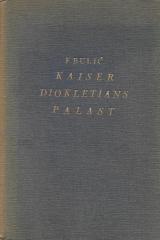
Kaiser Diokletians Palast in Split

Kaiser Diokletians Palast in Split

Frane Bulić, Ljubo Karaman
Matica hrvatska, 1929.
German. Latin alphabet. Hardcover.
19.99
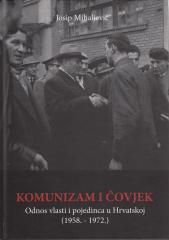
Komunizam i čovjek: Odnos vlasti i pojedinca u Hrvatskoj (1958.–1972.)

Komunizam i čovjek: Odnos vlasti i pojedinca u Hrvatskoj (1958.–1972.)

Josip Mihaljević

Josip Mihaljević's book analyzes the relationship between the government and the individual in communist Croatia (1958–1972), through repressive mechanisms, ideological pressures, and restrictions on personal freedom in the socialist system.

Hrvatski institut za povijest, 2016.
Croatian. Latin alphabet. Hardcover.
17.26
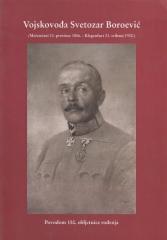
Vojskovođa Svetozar Boroević 1856-1920.

Vojskovođa Svetozar Boroević 1856-1920.

Milan Pojić

Svetozar Boroević, the most capable Austro-Hungarian military leader of the First World War, the only Croat who received the title of field marshal and was awarded the highest Austrian decorations, has been systematically hushed up in Croatian history.

Hrvatski državni arhiv, 2006.
Croatian. Latin alphabet. Paperback.
5.46
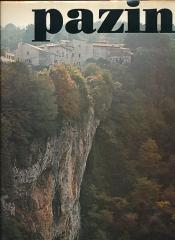
Pazin

Pazin

Petar Strčić

Pazin is a town in central Istria, known for its rich history and natural beauty. It is located above the karst abyss of Pazinska jama, into which the river Pazinčica plunges.

Skupština općine Pazin, 1982.
Croatian. Latin alphabet. Hardcover with dust jacket.
15.62
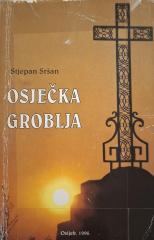
Osječka groblja

Osječka groblja

Stjepan Sršan

The book is deeply rooted in the local history and culture of Osijek, with an emphasis on cemetery motifs that serve as a metaphor for memory, death, and disappearance.

Povijesni arhiv u Osijeku, 1996.
Croatian. Latin alphabet. Paperback.
5.263.68
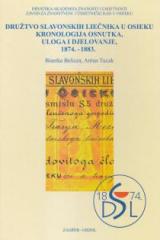
Družtvo slavonskih liečnika u Osieku : kronologija osnutka, uloga i djelovanje, 1874. - 1883.

Družtvo slavonskih liečnika u Osieku : kronologija osnutka, uloga i djelovanje, 1874. - 1883.

Biserka Belicza, Antun Tucak

Shaping of the doctor's professional identity in the second half of the 19th century resulted in the establishment of the Society Slavonian doctors in Osijek in 1874.

Hrvatski liječnički zbor, 2009.
Croatian. Latin alphabet. Hardcover.
6.865.15 - 6.98