De bello ragusino

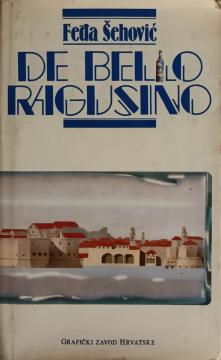
De bello ragusino

Feđa Šehović

The novel "De bello ragusino" by Feđa Šehović depicts the turbulent history of the Dubrovnik Republic through political conflicts, the fight for freedom, and the moral dilemmas of individuals, emphasizing the importance of preserving identity and dignity.

The novel De bello ragusino by Feđa Šehović is a historical work that, through irony, satire and elements of a chronicle, depicts the fate of the Dubrovnik Republic during the great wars in the Adriatic. The title in Latin means "On the Dubrovnik War", and refers to the historical conflicts that marked the survival of the small Republic between the interests of the great European powers. The novel is part of Šehović's Dubrovnik Tralalogy, a cycle in which the author critically but also humorously depicts Dubrovnik society.

The plot follows Dubrovnik nobles, city officials, merchants, soldiers and ordinary citizens. They experience war, political decisions and everyday difficulties differently. While the government tries to preserve the neutrality and independence of the Republic through diplomacy, ordinary people suffer the consequences of hunger, insecurity and uncertainty. The characters represent different social classes, and their fates form a mosaic of life in old Dubrovnik, with the author showing how ordinary people are often victims of the decisions of the powerful.

The historical context is based on the position of the Dubrovnik Republic as a small trading state that survived thanks to skillful diplomacy between great powers such as the Ottoman Empire and the Venetian Republic. Šehović does not depict war primarily through battles, but through its consequences on society and everyday life.

Humor, irony and satire serve him to expose political hypocrisy, greed and the struggle for power, but also to highlight the values ​​of freedom, reason and responsibility. In this way, the novel goes beyond the historical theme and becomes a reflection on the relationship between the individual, the government and the state, showing that history often repeats itself, and the survival of a community depends on the wisdom of its people.

Editor
Nenad Popović
Illustrations
Mirko Ilić
Graphics design
Zoran Pavlović
Dimensions
19.5 x 12 cm
Pages
179
Publisher
Grafički zavod Hrvatske (GZH), Zagreb, 1980.
 
Latin alphabet. Hardcover with dust jacket.
Language: Croatian.

One copy is available

Condition:Used, good condition (visible signs of use)
Damages or inconvenience notice:
  • Slight damage to the dust jacket
  • Stains on cover
  • Staines on the pages
 

Are you interested in another book? You can search the offer using our search engine or browse books by category.

You may also be interested in these titles

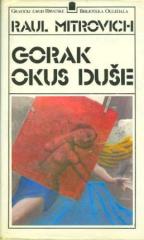
Gorak okus duše

Gorak okus duše

Raul Mitrovich, Feđa Šehović

The novel The bitter taste of the soul by Raul Mitrovich, pseudonym Feđa Šehović, was published in 1983. The work belongs to the type of Croatian new historical novel, where the historical context is present, but is not at the center of the writer's inter

Grafički zavod Hrvatske (GZH), 1983.
Croatian. Latin alphabet. Hardcover with dust jacket.
1.99
Muškarci imaju P.

Muškarci imaju P.

Darko Pernjak

In this collection of stories, Pernjak deals with quite ordinary, everyday situations, but finds something new and original in them. These are thematically diverse stories that center on interpersonal relationships.

Vošicki j.d.o.o., 2022.
Croatian. Latin alphabet. Paperback.
6.62
Tihe kuće

Tihe kuće

Goran Glamuzina

The collection Silent Houses, Goran Glamuzina's literary debut, includes six stories connected by characters in different identity and existential transitional states.

Naklada Ljevak, 2024.
Croatian. Latin alphabet. Hardcover with dust jacket.
9.26
Rudnik čvaraka

Rudnik čvaraka

Tomislav Šovagović

The debut work of Croatian writer Tomislav Šovagović, awarded the Josip and Ivan Kozarac Award in 2012, is a dedication to Slavonia – the region of his childhood that the author, born in Dalmatia, observes with foreign but tender eyes.

Mozaik knjiga, 20112.
Croatian. Latin alphabet. Paperback.
11.56
Uglavnom pridjevi

Uglavnom pridjevi

Hrvoje Jurić

The collection "Uglavnom adjevjevi" by Hrvoje Jurić brings together ten cycles of poetic sketches and poems.

Algoritam, 2014.
Croatian. Latin alphabet. Paperback.
8.14
Kuća u kojoj stanuje vrag

Kuća u kojoj stanuje vrag

Goran Tribuson

In The House Where the Devil Dwells, Tribuson also thematizes the time of new poverty, crazy jokes on the way to earning money, usury, jealousy, revenge, strikes, and murders.

Znanje, 2006.
Croatian. Latin alphabet. Paperback.
7.87