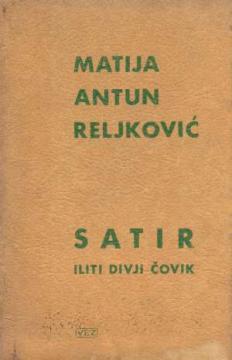
Satir iliti divlji čovik
The Enlightenment poem Satyr or the Wild Man by M. A. Reljković, through the dialogue between Satyr and Slavonian, sharply criticizes outdated customs and negligence and calls for education, work, and progress in Slavonia.
Satyr or the Wild Man (1st edition 1762, expanded in 1779) is the most important work of the Croatian Enlightenment, authored by the Slavonian writer and officer Matija Antun Reljković. Composed in the folk ten-line meter, this didactic-satirical poem was written with the clear intention of educating, instructing and economically uplifting the Slavonian peasantry after a century of Ottoman rule. The central part of the framework is the figure of Satyr – a mythical forest creature (“wild man”) – who observes Slavonia and, in a direct dialogue with a Slavonian peasant, offers a sharp criticism of the way of life of that time. Satyr does not spare the folk vices: superstition, drunkenness, idleness, neglect of agriculture, swearing and ignorance, labeling them the main culprits for the poverty and backwardness of the region. In contrast, Reljković glorifies the natural resources of Slavonia and offers specific Enlightenment advice on hygiene, rational economy, education and moral life. Although imbued with a Christian and moralistic spirit, the work had an extraordinary social and cultural impact. Satyr or Wild Man became extremely popular among contemporaries and remains a key testimony to the struggle for enlightenment and modernization of the Croatian countryside in the 18th century.
Multiple copies are available
Copy number 1
- Slight damage to the cover
Copy number 3
- Worn covers