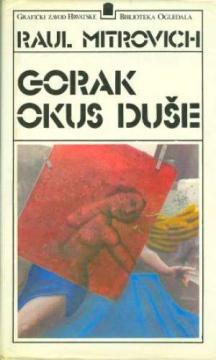
Gorak okus duše

Gorak okus duše

Raul Mitrovich, Feđa Šehović

The novel The bitter taste of the soul by Raul Mitrovich, pseudonym Feđa Šehović, was published in 1983. The work belongs to the type of Croatian new historical novel, where the historical context is present, but is not at the center of the writer's inter

The plot is set in the first half of the 16th century, a period marked by the penetration of the Ottomans into Europe. Dubrovnik, through a skillful diplomatic game with the Turks, manages to maintain its independence, which becomes a key element in the development of the story.

The main character, Friar Vincenc, naively believes in the justice of the Pope and the Christian authorities, which leads him to conflict with Dubrovnik politics and, in the end, to personal tragedy and falling into slavery. Through his fate, the author explores the themes of ideals, betrayal and moral dilemmas. Historical figures such as the historian Ludovik Crijević Tuberon and the poet Ivan Gučetić (Gozza) also appear in the novel, which further enriches the historical context of the work.

Šehović uses postmodernist literary techniques, such as "found manuscripts" and fictitious chronicles, creating a work that is both a historical novel and an allegory for contemporary events. With this approach, the author ranks among the founders of the new historical novel in Croatian literature. The Bitter Taste of the Soul offers an in-depth analysis of human nature and historical circumstances, providing the reader with an insight into the complexity of moral decisions and the consequences they carry.

Editor
Nenad Popović
Graphics design
Zoran Pavlović
Dimensions
19.5 x 12 cm
Pages
132
Publisher
Grafički zavod Hrvatske (GZH), Zagreb, 1983.
 
Latin alphabet. Hardcover with dust jacket.
Language: Croatian.

One copy is available

Condition:Used, very good condition
Damages or inconvenience notice:
  • Slight damage to the dust jacket
  • Library stamp
 

Are you interested in another book? You can search the offer using our search engine or browse books by category.

You may also be interested in these titles

Radovi na krovu: sedam džepnih krimića

Radovi na krovu: sedam džepnih krimića

Pavao Pavličić

Seven short, independent stories in the "pocket crime novel" format by the master of Croatian crime fiction: fast, tense, concise, with unexpected twists and Pavličić's typical blend of everyday life and crime.

Narodna knjiga, 1984.
Croatian. Latin alphabet. Paperback.
4.26
U rovovima interpretacija: Strategija i tragedija nelegitimnog čitanja

U rovovima interpretacija: Strategija i tragedija nelegitimnog čitanja

Nebojša Lujanović

The book by Split writer and political scientist Nebojša Lujanović (born 1981 in Novi Travnik) is an intriguing polemic against the ideological abuses of Ivo Andrić, especially the nationalistic readings of his work from the Bosnian, Serbian and Croatian

V.B.Z, 2020.
Croatian. Latin alphabet. Hardcover.
13.44
Nema slonova u Meksiku

Nema slonova u Meksiku

Zoran Pilić

These stories will make us laugh, but also imperceptibly take us to the other, dark side...

Fraktura, 2014.
Croatian. Latin alphabet. Hardcover with dust jacket.
6.98
Mrka kapa

Mrka kapa

Aristid Teofanović

Mrka kapa je knjiga kratke proze napisane pod pseudonimom Aristid Teofanović, koji koristi Slobodan Blagojević. Blagojević je poznat i pod heteronimem Anhel Antonić (poezija) i drugim delima pod svojim pravim imenom.

Feral Tribune, 2001.
Croatian. Latin alphabet. Paperback.
9.36
Seks skandal 2: Političari u krevetu

Seks skandal 2: Političari u krevetu

Izabela D.

Nastavak vrhunskog hita „Seks skandal: Ispovesti zagrebačke manekenke“, „Seks skandal 2: Političari u krevetu“, razotkriva moralni podmukli deo hrvatskih političara koji se javno ponašaju kao nesebični borci za opšte dobro, dok se privatno prepuštaju poho

24 sata.
Croatian. Latin alphabet. Paperback.
2.36
Posljednji Stipančići

Posljednji Stipančići

Vjenceslav Novak

Radnja romana Poslednji Stipančići smeštena je u prvu deceniju 19. veka. Fokusira se na propadanje jedne patricijske porodice i vraća se daleko u prošlost, u poslednje dve generacije ove porodice.

Mlado pokolenje, 1962.
Croatian. Latin alphabet. Paperback.
3.28