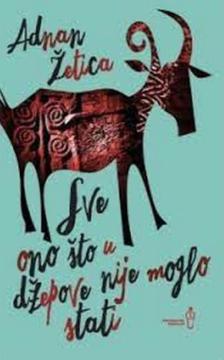
Sve ono što u džepove nije moglo stati

Sve ono što u džepove nije moglo stati

Adnan Žetica

Adnan Žetica's eye is focused on the space and time that flows through him; he is an observer who finds a poem in the little things that, in a small number of verses, exposes and shows the world in all its baseness, but also its beauty.

“Žetica's extraordinarily vivid images, sharply focused details of unpoetic everyday life and 'reporter's' carefully selected scenes from the social margins, extremely precisely evoke the social environment, painful places from intimate memories and all the tragedy of post-war traumatic reality. The expressiveness of the colloquial idiom, epigrammatic conciseness, bold, imaginative and unexpected comparisons, snapshots of experience that gradually develop into effective and insightful metaphors in shifted, unusual perspectives, which often have the function of ironic commentary, give these poems extraordinary authenticity and freshness. From the trivial contents of dull provincial everyday life, Žetica carefully selects those images and fragments whose small details most credibly reflect painful memories of war, persecution and the terrible reality of ethnic divisions and the social isolation and numbness of the Herzegovina region, hyperbolizes them and in lucid and unexpected turns metaphorically 'fixes' their empirical weight.“

Editor
Semezdin Mehmedinović
Graphics design
Boris Stapić
Dimensions
21 x 13.5 cm
Pages
129
Publisher
Buybook, Sarajevo, 2021.
 
Latin alphabet. Paperback.
Language: Croatian.

One copy is available

Condition:Unused
 

Are you interested in another book? You can search the offer using our search engine or browse books by category.

You may also be interested in these titles

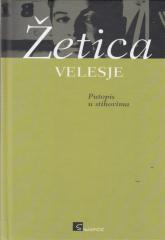
Velesje : Putopis u stihovima

Velesje : Putopis u stihovima

Adnan Žetica

The poetic and travel writing of Velesja by Adnan Žetica is a depiction of the inner sensibility of a poet, storyteller, and essayist who, through his literary expression, often conducts a dialogue with himself, as well as with his reader.

Synopsis, 2019.
Croatian. Latin alphabet. Hardcover.
11.32
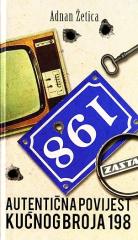
Autentična povijest kućnog broja 198

Autentična povijest kućnog broja 198

The collection Authentic History of House Numbers won an award at the foundation's publishing competition (2017).

Dobra knjiga, 2017.
Croatian. Latin alphabet. Hardcover.
6.98
Muze i Erinije : Sabrane pjesme : 1977. - 2020.

Muze i Erinije : Sabrane pjesme : 1977. - 2020.

Mile Stojić

Writing in the first person singular, Stojić depicted the life and dreams, experience and fate, defeat and loss of homeland of a generation, a city, an era.

VBZ, 2021.
Croatian. Latin alphabet. Hardcover.
21.98
88

88

Nadija Rebronja

A piano usually has 88 keys, 52 white and 36 black, from which 88 tones emerge. A pianist usually reads 88 notes. These 88 micro-proses simultaneously constitute one piano and one piano concerto.

Buybook, 2022.
Croatian. Latin alphabet. Paperback.
5.94
Perje svitanja

Perje svitanja

Stevo Leskarac

In Leskarc's poems, we will quickly find themes about art and creativity, the Croatian language and folk customs, and national heritage.

Naklada Bošković, 2020.
Croatian. Latin alphabet. Hardcover.
11.96
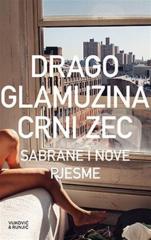
Crni zec (sabrane i nove pjesme)

Crni zec (sabrane i nove pjesme)

Drago Glamuzina

The title poem, "The Black Rabbit," represents a kind of symbolist maneuver within "real" poetry, because like Baudelaire's "Albatross," it possesses a pronounced unambiguous charge.

Vuković & Runjić, 2022.
Croatian. Latin alphabet. Paperback.
8.56 - 9.98