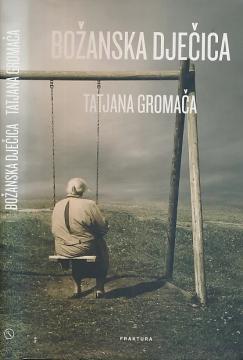
Božanska dječica

Božanska dječica

Tatjana Gromača

And in her latest book, Divine Children, Gromača is decisive, personally open, without pandering to anyone.

Mental illness and dealing with it unfold before the reader on all levels, from external to intimate. Tatjana Gromača is a stylistic perfectionist whose sentences always precisely hit the core of the problem. The novel Divine Children demands an attentive reader, ready to face their own traumas. Cathartic and powerful, these prose fragments form a unique novelistic whole in which, through the fate of one woman, all the most hidden traumas of a society unwilling to accept anything different are refracted and resolved. Tatjana Gromača's prose has the properties of primordial elements; it is devoid of any embellishment, any superfluous additions, it is stripped down to the bare essentials, which is why when reading it we feel the power of Greek tragedies. Tatjana Gromača is the most eminent writer of new Croatian prose, because she is incorruptible, sharp and so bitter. Gromača stands out for its precious roughness, there is almost no other phenomenon of this type in our country, which is devoid of any sweetness, and the almost obligatory youthful triumphalism. She has nothing to be happy about, living in familiar situations and difficult general circumstances, but she can be proud because she knows that. Her latest prose is a tiny masterpiece.

Editor
Seid Serdarević
Dimensions
21 x 13.5 cm
Pages
179
Publisher
Fraktura, Zaprešić, 2012.
 
Latin alphabet. Hardcover with dust jacket.
Language: Croatian.

One copy is available

Condition:Used, excellent condition
 

Are you interested in another book? You can search the offer using our search engine or browse books by category.

You may also be interested in these titles

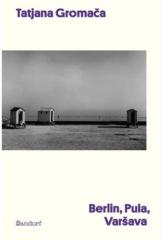
Berlin, Pula, Varšava

Berlin, Pula, Varšava

Tatjana Gromača
Sandorf, 2022.
Croatian. Latin alphabet. Hardcover.
12.98
Pariški maraton : Knjiga pisanja (Pariz21. i 22. oktobar 2023)

Pariški maraton : Knjiga pisanja (Pariz21. i 22. oktobar 2023)

At the end of the eighties, Damir Uzunović traveled to Paris and stayed there for less than a year. He was twenty years old at the time, and that exile episode would be formative for the literature he would later write.

Buybook, 2024.
Croatian. Latin alphabet. Hardcover.
12.22
Proces

Proces

Franz Kafka

Kafka wrote The Process between 1914 and 1915, published posthumously in 1925. The novel is unfinished but with an added final chapter by Max Brod. Edition with a foreword by B. Živojinović and an afterword by Walter Killi.

BIGZ, 1990.
Serbian. Latin alphabet. Paperback.
4.26
Pripovetke iz levog i desnog džepa

Pripovetke iz levog i desnog džepa

Karel Čapek

These stories deal with different topics, although most deal with different criminal acts, from fraud and fortune-telling to marriage fraud and murder.

Jugoslavijapublik, 1980.
Croatian. Latin alphabet. Hardcover.
5.223.65
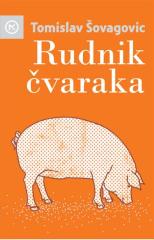
Rudnik čvaraka

Rudnik čvaraka

Tomislav Šovagović

The debut work of Croatian writer Tomislav Šovagović, awarded the Josip and Ivan Kozarac Award in 2012, is a dedication to Slavonia – the region of his childhood that the author, born in Dalmatia, observes with foreign but tender eyes.

Mozaik knjiga, 20112.
Croatian. Latin alphabet. Paperback.
11.568.09
Deobe 1-3

Deobe 1-3

Dobrica Ćosić

This work, awarded the NIN Prize for that year, is considered one of the most significant in Serbian literature after World War II.

Prosveta, 1961.
Serbian. Cyrillic alphabet. Hardcover with dust jacket.
The book consists of 3 volumes
11.42