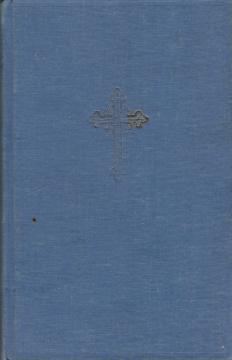
Sveto pismo Staroga i Novoga zavjeta
A classic translation of the Holy Scriptures into Serbian, known as the Vuk-Daničić Bible. The New Testament was translated by Vuk Stefanović Karadžić (1847, Vienna), and the Old Testament by Đuro Daničić (completed in 1865, published in 1868 in Belgrade)
The British and Foreign Bible Society took over the publishing, revised and mass-distributed the Bible in several editions (first complete in 1868/1870, then repeated: 1895 Budapest, 1933, 1950, 1972 Belgrade/New York-London, etc.).
The translation is based on the original languages (Hebrew, Aramaic for the OT; Greek for the NT), with the influence of the Septuagint and Church Slavonic heritage, but in the spirit of Vuk's language reform: the vernacular, Štokavian Ekavian, Latin or Cyrillic depending on the edition. Daničić's OT is poetic, rhythmic, archaic in expression, but accessible - it is considered one of the most beautiful translations of the Bible into South Slavic languages, with extraordinary melody and power of expression (e.g. Psalms, Ecclesiastes, Isaiah).
The British Society extensively disseminated it among Serbs, Croats, and other Slavs, often in "Croatianized" variants:
- Bogoslav Šulek's redaction (New Testament and Psalms, Ijekavian/Croatian elements);
- Milan Rešetar (entire Bible, revised edition). These adaptations made it acceptable in the Croatian context until the appearance of newer translations (Šarić, Jeruzalemska Biblija, Zagreb 1968).
This is a fundamental translation for Serbian and partly Croatian culture of the 19th–20th centuries – influenced literature, language, poetry (e.g. Njegoš, modernists). Criticized for its Protestant emphasis (The Society is non-denominational), but praised for its linguistic beauty, precision, and rhythm. It is still used today in Orthodox and Evangelical circles.
The key value of the translation is the blend of vernacular and biblical sublimity – "unsurpassed" by many for poetic and existential purposes.
No copies available
The last copy was sold recently.