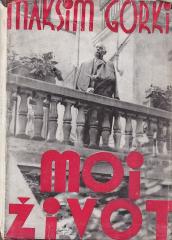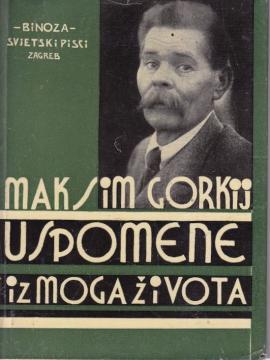
Uspomene iz mog života
The autobiographical prose of Maxim Gorky, who in a series of vivid and poignant images depicts his difficult childhood, youth and wanderings through Russia, encounters with ordinary people, poverty, violence and his first steps in literature.
Maxim Gorky (real name Aleksei Maksimovich Peshkov, 1868–1936) published Memories of My Life as part of his autobiographical works. The Croatian edition by Binoza Publishing from 1934, translated by Stjepan Kranjčević, presents a selection of Gorky's memories from his childhood and youth.
The book is a powerful, realistic and often naturalistic picture of Russian life at the end of the 19th century. Gorky describes his early orphanhood, life with his grandparents in Nizhny Novgorod, the difficult working conditions in bakeries, on steamboats, in icon-painting workshops and wandering around Russia. Particularly impressive are the portraits of ordinary people – beggars, workers, thieves, wanderers and saints – whom he meets on his journey.
Unlike classic autobiography, Gorky does not write chronologically, but in a series of powerful, independent images and episodes. The style is direct, raw and extremely plastic – the reader can almost smell the slums, the Volga and the dust of Russian roads. The book exudes deep compassion for the “humiliated and insulted”, but also faith in man and his strength.
This edition was very popular among the Croatian literary audience in the 1930s because it presents Gorky in his most authentic, most vital phase – before he became the official bard of socialist realism. Memories of My Life is considered one of Gorky’s best prose works and a classic example of Russian autobiographical literature of the 20th century. The antiquarian edition of Binoza is rare and sought after.
One copy is available
- The cover is missing