Émile Zola

Émile Zola

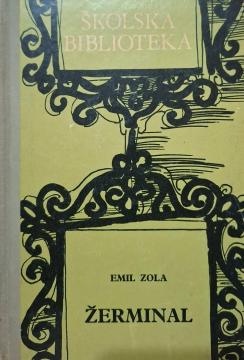
Žerminal

In his best work, Germinal, Émile Zola realistically, in minute detail, described the inhuman living and working conditions of miners in northern France in the 1860s.

Germinal is a novel published in 1885, one of the most important in Zola's "Rougon-Macquart" cycle. The main character, Étienne Lantier, a young worker who lost his job due to his impetuous nature, comes to the mining settlement of Montsou and gets a job at the Voreux mine. There, he witnesses the brutal working conditions, injustice, and misery that plagues the mining families. Étienne becomes increasingly politically aware, embraces socialist ideas, and organizes a strike in an effort to get workers better conditions and wages. The strike, initially full of hope, soon develops into a struggle for bare survival. The government and mining employers brutally suppress the rebellion, and the strikers and their families suffer hunger and death. The mine becomes a symbol of the relentless force that grinds the workers down. Despite the defeat, the novel ends with symbolic hope: Germinal – a month in the French revolutionary calendar that marks the awakening of nature – suggests that, like spring, workers' resistance will once again flourish. In "Germinal," Zola masterfully combines a naturalistic depiction of misery with strong emotion and social engagement. The work remains one of the most powerful depictions of social injustice in literature.

Translation
Dušan Matić
Editor
Muris Idrizović
Graphics design
Mladen Kolobarić
Dimensions
17 x 12 cm
Pages
541
Publisher
Svjetlost, Sarajevo, 1967.
 
Latin alphabet. Hardcover.
Language: Serbian.

One copy is available

Condition:Used, very good condition
 

Are you interested in another book? You can search the offer using our search engine or browse books by category.

You may also be interested in these titles

Djeca kapetana Granta

Djeca kapetana Granta

Jules Verne

A classic "Verne-esque" adventure in which the heroes get into trouble after trouble, full of incredible twists and dangerous situations that make the reader anxious, although it is clear that the story must have a happy ending.

Novo pokoljenje, 1950.
Croatian. Latin alphabet. Hardcover.
4.72
A što ako vrijeme ne postoji?

A što ako vrijeme ne postoji?

Carlo Rovelli

Ten years before he discovered the theory of general relativity, Einstein realized that time and space were not two separate entities, but two aspects of one and the same entity.

Tim press, 2015.
Croatian. Latin alphabet. Paperback.
6.78
Vrijeme nasilja

Vrijeme nasilja

Jean-Pierre Simon

A Time of Violence (1966) is an anti-war and activist novel by French writer Jean-Pierre Simon, a lesser-known author from the mid-20th century, whose work bears traces of leftist literature of the 1930s and 1940s.

Svjetlost, 1965.
Croatian. Latin alphabet. Paperback.
2.46
Malo sunca u hladnoj vodi

Malo sunca u hladnoj vodi

Françoise Sagan

A Little Sun in Cold Water (1971) is a novel by French author Françoise Sagan.

Naprijed, 1971.
Croatian. Latin alphabet. Hardcover.
4.88
Baselska zvona

Baselska zvona

Louis Aragon

The novel follows three women: Diane, a noblewoman; Catherine Simonidzé, a feminist; and the real Clara Zetkin, a communist. Through their destinies, the crisis of bourgeois society, women's emancipation, and the path to communism are depicted.

Kultura, 1946.
Serbian. Latin alphabet. Hardcover.
5.76
Ljubavnici sa Tahoa

Ljubavnici sa Tahoa

Joseph Kessel

The plot is set in Lisbon, along the Tagus River, and follows an emotional and complex love story intertwined with dramatic elements.

Minerva, 1987.
Serbian. Latin alphabet. Hardcover.
4.98