Émile Zola

Émile Zola

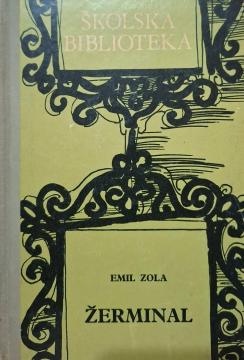
Žerminal

In his best work, Germinal, Émile Zola realistically, in minute detail, described the inhuman living and working conditions of miners in northern France in the 1860s.

Germinal is a novel published in 1885, one of the most important in Zola's "Rougon-Macquart" cycle. The main character, Étienne Lantier, a young worker who lost his job due to his impetuous nature, comes to the mining settlement of Montsou and gets a job at the Voreux mine. There, he witnesses the brutal working conditions, injustice, and misery that plagues the mining families. Étienne becomes increasingly politically aware, embraces socialist ideas, and organizes a strike in an effort to get workers better conditions and wages. The strike, initially full of hope, soon develops into a struggle for bare survival. The government and mining employers brutally suppress the rebellion, and the strikers and their families suffer hunger and death. The mine becomes a symbol of the relentless force that grinds the workers down. Despite the defeat, the novel ends with symbolic hope: Germinal – a month in the French revolutionary calendar that marks the awakening of nature – suggests that, like spring, workers' resistance will once again flourish. In "Germinal," Zola masterfully combines a naturalistic depiction of misery with strong emotion and social engagement. The work remains one of the most powerful depictions of social injustice in literature.

Translation
Dušan Matić
Editor
Muris Idrizović
Graphics design
Mladen Kolobarić
Dimensions
17 x 12 cm
Pages
541
Publisher
Svjetlost, Sarajevo, 1967.
 
Latin alphabet. Hardcover.
Language: Serbian.

One copy is available

Condition:Used, very good condition
 

Are you interested in another book? You can search the offer using our search engine or browse books by category.

You may also be interested in these titles

Pod plaštom noći

Pod plaštom noći

Claude Aveline

This collection is perfect for fans of psychological mysteries like Agatha Christie or Simenon, but with a French poetic touch.

Kosmos, 1958.
Serbian. Latin alphabet. Paperback.
2.12 - 2.14
Crveni krin

Crveni krin

Anatole France

The Red Lily (1894) is not just a story of forbidden passion – it is a subtle, ironic fresco of a world in which love, politics, and art intertwine in a thin, almost transparent web of conventions and desires.

Svjetlost, 1961.
Serbian. Latin alphabet. Hardcover.
4.26
Morski orao

Morski orao

Eduard Peisson

Édouard Peisson, a French writer specializing in maritime novels, brings a story set in the world of the sea and ships in this work, which is typical of his oeuvre.

Svjetlost, 1964.
Croatian. Latin alphabet. Paperback.
2.64
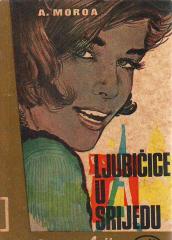
Ljubičice u srijedu

Ljubičice u srijedu

Andre Maurois

André Maurois, a French writer known for his psychological novels and biographies, explores themes of family relationships, love, and internal conflicts in this work, which is characteristic of his style.

Svjetlost, 1965.
Croatian. Latin alphabet. Paperback.
3.42 - 3.62
Kleopatra: Egipatska kraljica

Kleopatra: Egipatska kraljica

Claude Ferval

The novel tells the lavish story of the last Egyptian queen, a woman of exceptional intelligence and beauty, whose life, love affairs with Caesar and Antony, and tragic death symbolize the collision of power, passion, and fate.

Alfa, 1985.
Croatian. Latin alphabet. Hardcover with dust jacket.
8.34
Napoleon

Napoleon

Alexandre Dumas

The novel is part of a series of Dumas' historical-biographical novels in which the author, based on real events, creates an exciting and accessible portrayal of great figures in world history.

Epoha, 1966.
Croatian. Latin alphabet. Hardcover with dust jacket.
4.88