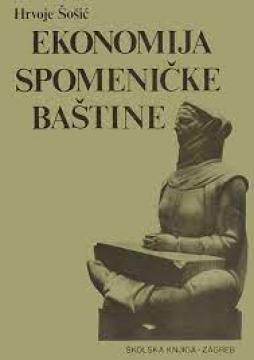
Ekonomija spomeničke baštine
One copy is available

One copy is available
Are you interested in another book? You can search the offer using our search engine or browse books by category.
A collection of essays by the Bulgarian historian Maria Todorova (known for Imaginary Balkans), compiled especially for the 20th Century Library. Indispensable for understanding post-communist transitions, culture of memory and Balkan studies.
The book describes how the Western Balkans, after initial democratic hopes in the 2000s, slipped into competitive authoritarianism. It explains the mechanisms of "strongman" rule, the role of EU stabilocracy and why democracy does not consolidate.
In the book, Todorov examines the relationship between the production of discourse (rhetoric) and its interpretation (hermeneutics), focusing on verbal symbolism – the phenomenon of indirect meaning that builds on direct, literal meaning.
The book contains three Latin reports by the Croatian Jesuit, nobleman and explorer Ivan Rattkay (Ratkaj, 1647–1683), born in Ptuj (today Slovenia), sent to the provincial of the Austro-Czech Jesuit province from the mission in northern Mexico.
The collection is an interdisciplinary bridge between Ukrainian and Croatian science, encouraging comparative research on Slavic migrations. It presents the Carpathians as a "living archipelago" connecting East and West, important for Croatian ethnogenesi
At the center of Jezernik's scientific work is ethnological and anthropological research of the Balkans and Eastern Europe.