U glib - iz velegradskog podzemlja
Antikvitet

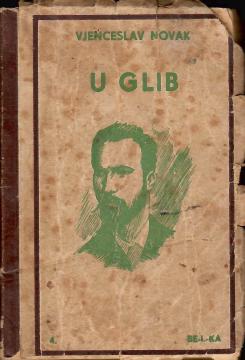
U glib - iz velegradskog podzemlja

Vjenceslav Novak

"U glib - iz Velegradsko podzemlje" is a social short story published by Vjenceslav Novak in 1905, and it powerfully portrays the problems of the working class in Zagreb at the turn of the 19th and 20th centuries.

Throughout the story, the author deals with the themes of poverty, prejudice against the poor and the problem of drunkenness, which plays a key role in the development of the plot. As in many of Novak's works, a pronounced social theme is present here as well.

Novak, who himself knew a hard life, shows the everyday life of people who barely make ends meet, while struggling with the prejudices of higher social classes. Through the character of Mikina, the author criticizes the attitudes of the rich towards the poor, portraying them as a shame that should be avoided. This symbolism is expressed in Mika's apartment, described as a gloomy space that reflects the isolation and aversion of the upper classes towards the poor.

In the story, you can feel the deep suffering of poor families, students and workers who are struggling with the troubles of life. Their destinies are often imbued with helplessness, while the wealthier swim in abundance. Novak focuses on characters who, despite their goodness, are trapped in the shackles of social injustice. The problems they face include drunkenness and loss of dignity, as can be seen with the drunk Slovak or the sick Štef, whose fates depict the hopelessness of the situation.

Novak's short story can be compared to the works of great authors such as Fyodor Mikhailovich Dostoyevsky, who also explores the themes of poverty and social injustice. In Dostoevsky, through the character of Raskolnikov, we see a deep psychological exploration of moral dilemmas arising from existential crises. Similarly, Novak's characters, like Mika and Jankić, face difficult life circumstances and internal conflicts, which makes their struggle emotionally powerful and relevant.

Urednik
Zlatko Milković
Naslovnica
Aleks Marks
Dimenzije
11 x 8 cm
Broj strana
125
Nakladnik
Minerva nakladna knjižara, Zagreb, 1941.
 
Latinica. Broširano.
Jezik: Hrvatski.

Nema primjeraka u ponudi

Poslednji primjerak je nedavno prodan.

 

Zanima Vas i neka druga knjiga? Možete pretražiti našu ponudu pomoću tražilice ili prelistati knjige po kategorijama.

Možda će Vas zanimati i ovi naslovi

Nikola Baretić

Nikola Baretić

Vjenceslav Novak

Nikola Baretić follows the fate of the main character in the Senj area, faced with jealousy, marital conflicts and social pressures. A realistic novel about passions, honor and decay in a 19th century petty-bourgeois environment.

Minerva nakladna knjižara, 1932.
Hrvatski. Latinica. Tvrde korice.
4,99 - 5,76
Dva svijeta

Dva svijeta

Vjenceslav Novak

A psychological novel about musician Amadej Zlatanić who, after studying in Prague, returns to Croatia, where he faces the misunderstanding of his petty-bourgeois surroundings and ends up in a madhouse. The conflict between artistic ideals and reality.

Minerva nakladna knjižara, 1932.
Hrvatski. Latinica. Tvrde korice.
5,26
Izabrane pripovijesti

Izabrane pripovijesti

Vjenceslav Novak
Matica hrvatska, 1925.
Hrvatski. Latinica. Tvrde korice.
Knjiga se sastoji od 4 toma
16,99
Tri mušketira 1-2

Tri mušketira 1-2

Alexandre Dumas

Dumasova verzija priče prikazuje avanture d’Artagnana i njegovih prijatelja od 1625 do 1628.

Epoha, 1966.
Hrvatski. Latinica. Tvrde korice s ovitkom.
Knjiga se sastoji od dva toma
9,48
Crna kutija

Crna kutija

Amos Oz

Crna kutija kaleidoskop je bračnog života i ljubavnih odnosa. Roman je to koji implicitno priča o svima nama.

Hena Com, 2001.
Hrvatski. Latinica. Tvrde korice.
10,988,78
Usta puna zemlje

Usta puna zemlje

Branimir Šćepanović

The novel "Usta puna zemlje" (1970), the masterpiece of the Serbian writer Branimir Šćepanović, is a psychologically in-depth explorer of the limits of the human soul, solitude and existential freedom, reminiscent of Kafka and Camus.

BIGZ, 1987.
Srpski. Latinica. Broširano.
3,98