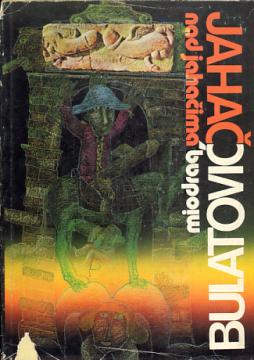
Jahač nad jahačima

Jahač nad jahačima

Miodrag Bulatović

A novel about the absurd, power and downfall of a man obsessed with greatness. In a symbolic, grotesque world, the author exposes the cruelty of power and madness in which ambition and fear blur the line between man and beast.

The novel The Rider of Riders (published in 1966) is one of the most significant and complex works by Miodrag Bulatović, a writer known for his grotesque expression and exploration of the dark depths of the human psyche. The work is an allegory of violence, deformed morality, and the spread of madness in societies that idolize power.

The action takes place in a closed, symbolic space resembling a totalitarian world in which the "rider" appears — a figure of power, obsessed with his own greatness and superiority over others. His rise and fall are depicted through the prism of fantastic and grotesque scenes, in which reality loses its shape, and the line between oppressor and victim disappears.

Bulatović uses strong metaphors, dense language, and a mixture of black humor, irony, and brutal realism to depict the dehumanization and destructiveness of power, but also man's inner need for submission and domination. The novel is imbued with an atmosphere of anxiety, visions and madness, which makes it close to the tradition of Dostoyevsky and Kafka, although it retains southern, Balkan poetics.

At the center of Riders over Riders is not only the dictator, but also the mass that supports him and feeds his power — Bulatović thereby opens up the question of responsibility, collective fear and moral failure. Due to its symbolism, aesthetic power and universal themes, the novel is counted among the masterpieces of modernist and existential prose of former Yugoslavian literature.

Dimenzije
24 x 17 cm
Broj strana
143
Nakladnik
Partizanska knjiga, Beograd, 1980.
 
Latinica. Tvrde korice s ovitkom.
Jezik: Srpski.

Jedan primjerak je u ponudi

Stanje:Korišteno, u lošem stanju
Dodano u košaricu!
 

Zanima Vas i neka druga knjiga? Možete pretražiti našu ponudu pomoću tražilice ili prelistati knjige po kategorijama.

Možda će Vas zanimati i ovi naslovi

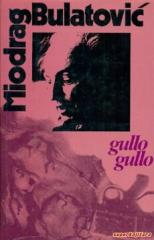
Gullo Gullo

Gullo Gullo

Miodrag Bulatović

Gullo Gullo ist ein grotesk eindringlicher Roman über den moralischen und spirituellen Verfall eines Menschen. In einer Welt voller Gewalt, Angst und Absurdität irrt die Hauptfigur zwischen Leben und Tod, Gut und Böse umher, auf der Suche nach Sinn in ein

Prosveta, 1983.
Srpski. Latinica. Tvrde korice s ovitkom.
2,82
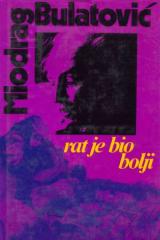
Rat je bio bolji

Rat je bio bolji

Miodrag Bulatović

Als eigenständiges Werk konzipiert und realisiert, kann dieser Roman auch als zweiter Teil des Buches „Der Held auf dem Esel“ interpretiert werden. Noch stärker als in „Der Held“ wird hier der Krieg, „der besser war“, als gigantische Burleske und als ein

Prosveta, 1983.
Srpski. Latinica. Tvrde korice s ovitkom.
2,99
Usta puna zemlje

Usta puna zemlje

Branimir Šćepanović

Der Roman „Usta puna zemlje“ (1970), das Meisterwerk des serbischen Schriftstellers Branimir Šćepanović, ist eine psychologisch tiefgründige Erkundung der Grenzen der menschlichen Seele, der Einsamkeit und der existenziellen Freiheit, die an Kafka und Cam

BIGZ, 1987.
Srpski. Latinica. Broširano.
3,98
Krčma

Krčma

Julian Stryjkowski

Das 1977 erschienene Buch „Inn“ von Julian Stryjkowski untersucht das Leben in einem kleinen jüdischen Dorf in Galizien im 19. Jahrhundert.

BIGZ, 1977.
Srpski. Latinica. Broširano.
4,38
Tri mušketira 1-2

Tri mušketira 1-2

Alexandre Dumas

Dumas' Version der Geschichte schildert die Abenteuer von d'Artagnan und seinen Freunden von 1625 bis 1628.

Epoha, 1966.
Hrvatski. Latinica. Tvrde korice s ovitkom.
Knjiga se sastoji od dva toma
9,48
Pustolovine Toma Sawyera

Pustolovine Toma Sawyera

Mark Twain

Die Abenteuer des Tom Sawyer sind der erste wirklich realistische Kinderroman, nicht nur in der amerikanischen, sondern auch in der weltweiten Kinderliteratur. Twains berühmtestes Werk und ein beliebtes Kinderbuch, in dem der Autor seine Kindheitserlebnis

Nakladni zavod Hrvatske, 1947.
Hrvatski. Latinica. Tvrde korice.
16,32