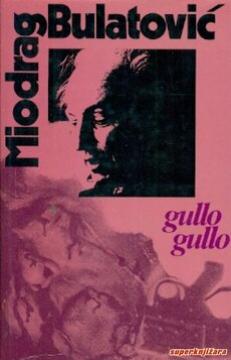
Gullo Gullo

Gullo Gullo

Miodrag Bulatović

Gullo Gullo is a grotesquely powerful novel about the moral and spiritual decay of a human being. In a world of violence, fear and absurdity, the main character wanders between life and death, good and evil, in search of meaning in a tragically twisted re

The novel Gullo Gullo by one of the most famous Yugoslav novelists, Miodrag Bulatović, published in 1970, is the culmination of his creative world in which the combination of madness, magic and brutal reality turns into a powerful allegory of human evil. The title of the novel, derived from the onomatopoeia of screams and animal sounds, symbolizes the primal cry of a man deprived of reason, meaning and soul.

At the heart of the story is a series of characters—warriors, losers, criminals, and fanatics—moving through an apocalyptic dreamlike landscape. Through their destinies, Bulatović shows the dehumanization and moral collapse of a world where madness and violence have become everyday. The author creates an atmosphere of strong symbolism and the grotesque, mixing the real and the fantastic, the sacred and the demonic.

The themes of the novel include the absurdity of war, collective madness, religious and ideological blindness, as well as the senselessness of human suffering. Bulatović's expression is explosive and picturesque, full of metaphors, brutal images and a rhythm reminiscent of an oral epic. His characters are no longer realistically depicted people, but archetypes — bearers of evil, fear or remorse.

Gullo Gullo closes the trilogy begun with the novels Devils Are Coming and Rider of Riders, in which Bulatović develops his poetics of grotesque and existential anxiety to the extreme. The work remains a powerful literary vision of the collapse of humanity and of a man who, faced with his own demonic face, utters the last cry of civilization.

Dimenzije
21 x 14 cm
Broj strana
246
Nakladnik
Prosveta, Beograd, 1983.
 
Tiraž: 10.000 primjeraka
 
Latinica. Tvrde korice s ovitkom.
Jezik: Srpski.

Jedan primjerak je u ponudi

Stanje:Korišteno, u vrlo dobrom stanju
Oštećenja / nepogodnosti:
  • Slight damage to the cover
  • The cover is missing
Dodano u košaricu!
 

Zanima Vas i neka druga knjiga? Možete pretražiti našu ponudu pomoću tražilice ili prelistati knjige po kategorijama.

Možda će Vas zanimati i ovi naslovi

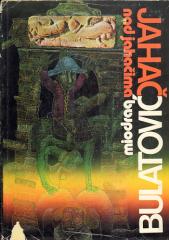
Jahač nad jahačima

Jahač nad jahačima

Miodrag Bulatović

A novel about the absurd, power and downfall of a man obsessed with greatness. In a symbolic, grotesque world, the author exposes the cruelty of power and madness in which ambition and fear blur the line between man and beast.

Partizanska knjiga, 1980.
Srpski. Latinica. Tvrde korice s ovitkom.
9,99
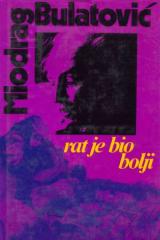
Rat je bio bolji

Rat je bio bolji

Miodrag Bulatović

Conceived and realized as a separate entity, this novel can also be interpreted as the second part of the book "The Hero on the Donkey." To a greater extent than in "The Hero," here the war "which was better" is depicted as a gigantic burlesque and a pool

Prosveta, 1983.
Srpski. Latinica. Tvrde korice s ovitkom.
2,99
Proces

Proces

Franz Kafka

Kafka wrote The Process between 1914 and 1915, published posthumously in 1925. The novel is unfinished but with an added final chapter by Max Brod. Edition with a foreword by B. Živojinović and an afterword by Walter Killi.

BIGZ, 1990.
Srpski. Latinica. Broširano.
4,26
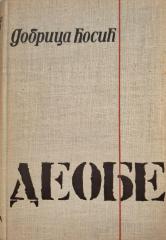
Deobe

Deobe

Dobrica Ćosić

Deobe is a novel about the tragic division of Serbs into Chetniks and Partisans during World War II. Winner of the NIN Award, it is part of a wider epic trilogy, inspired by Ćosić's experiences and historical documents.

Prosveta, 1963.
Hrvatski. Latinica. Tvrde korice s ovitkom.
13,74
Pripovetke iz levog i desnog džepa

Pripovetke iz levog i desnog džepa

Karel Čapek

These stories deal with different topics, although most deal with different criminal acts, from fraud and fortune-telling to marriage fraud and murder.

Jugoslavijapublik, 1980.
Hrvatski. Latinica. Tvrde korice.
5,22
Rudnik čvaraka

Rudnik čvaraka

Tomislav Šovagović

The debut work of Croatian writer Tomislav Šovagović, awarded the Josip and Ivan Kozarac Award in 2012, is a dedication to Slavonia – the region of his childhood that the author, born in Dalmatia, observes with foreign but tender eyes.

Mozaik knjiga, 20112.
Hrvatski. Latinica. Broširano.
11,56