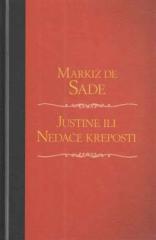
Justine ili nedaće kreposti
Roman prati mladu, kreposnu Žistin koja, nakon što izgubi roditelje, beži iz manastira i trpi niz užasnih zlostavljanja, silovanja i poniženja jer odbacuje zločin i porok. Vrlina se kažnjava, porok se nagrađuje.
Roman markiza de Sada, prvi put anonimno objavljen 1791. godine u Parizu (kasnije proširene verzije 1797. i 1801. godine), jedno je od najkontroverznijih dela svetske književnosti. Glavna junakinja Žistin (koja se predstavlja kao Tereza) je mlada, lepa, pobožna i naivna devojka koja, nakon smrti roditelja i gubitka imovine, napušta manastir i pokušava da živi poštenim i vrlinski životom.
Roman je strukturiran kao niz Žistininih nesreća: bežeći od zla, ona pada u ruke razbojnika, lopova, sadističkih plemića, korumpiranih sveštenika, pseudonaučnika i tiranina koji je siluju, muče, ponižavaju i koriste za svoja perverzna zadovoljstva. Svaki put kada pokuša da pomogne drugima ili se osloni na moral, veru i pravdu, biva još surovije kažnjena. Nasuprot nje stoji njena sestra Žilijeta (u kasnijem romanu Žilijeta, ili blagostanje poroka), koja bira put poroka i zločina i postiže bogatstvo i moć.
Kroz filozofske diskusije likova (ateističke, nihilističke, materijalističke monologe), Sad predstavlja radikalnu kritiku hrišćanskog morala, promisli i društvenih normi: vrlina je slabost, priroda je amoralna i favorizuje jake nad slabima, a Bog ne postoji ili je surov. Delo je filozofski pornografski traktat – eksplicitno opisuje nasilje, incest, sodomiju, mučenje i druge ekstremne scene kako bi ilustrovao tezu da se porok nagrađuje, a vrlina osuđuje. Objavljen u vreme Francuske revolucije, roman je izazvao skandal, doveo do Sadovog ponovnog hapšenja i uticao na kasniju književnost (romantizam, egzistencijalizam, nadrealizam).
Danas se smatra ključnim delom za razumevanje sadizma (termin izveden iz Sadovog imena), ali i dubokom kritikom licemerja društva i religije. Zbog eksplicitnosti, nije za svakoga – upozorava na nasilje i seksualne perverzije.
Jedan primerak je u ponudi