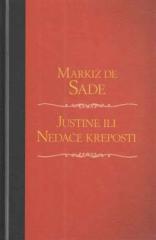
Justine ili nedaće kreposti
Der Roman erzählt die Geschichte der jungen, tugendhaften Justine, die nach dem Tod ihrer Eltern aus einem Kloster flieht und eine Reihe entsetzlicher Misshandlungen, Vergewaltigungen und Demütigungen erleidet, weil sie Verbrechen und Laster ablehnt. Tuge
Der Roman des Marquis de Sade, 1791 zunächst anonym in Paris erschienen (spätere erweiterte Fassungen 1797 und 1801), zählt zu den umstrittensten Werken der Weltliteratur. Die Hauptfigur Justine (die sich als Thérèse vorstellt) ist ein junges, schönes, frommes und naives Mädchen, das nach dem Tod ihrer Eltern und dem Verlust ihres Besitzes das Kloster verlässt und versucht, ein ehrliches und tugendhaftes Leben zu führen.
Der Roman ist als Kette von Justines Schicksalsschlägen aufgebaut: Auf der Flucht vor dem Bösen gerät sie in die Hände von Banditen, Dieben, sadistischen Adligen, korrupten Priestern, Pseudowissenschaftlern und Tyrannen, die sie vergewaltigen, foltern, demütigen und für ihre perversen Gelüste missbrauchen. Jedes Mal, wenn sie versucht, anderen zu helfen oder sich auf Moral, Glauben und Gerechtigkeit zu berufen, wird sie noch grausamer bestraft. Ihr gegenüber steht ihre Schwester Juliette (im späteren Roman „Juliette oder der Wohlstand des Lasters“), die den Weg des Lasters und des Verbrechens wählt und zu Reichtum und Macht gelangt.
Durch die philosophischen Diskussionen der Figuren (atheistische, nihilistische, materialistische Monologe) übt Sade eine radikale Kritik an christlicher Moral, Vorsehung und gesellschaftlichen Normen: Tugend sei Schwäche, die Natur amoralisch und bevorzuge die Starken gegenüber den Schwachen, und Gott existiere nicht oder sei grausam. Das Werk ist eine philosophisch-pornografische Abhandlung – es beschreibt explizit Gewalt, Inzest, Sodomie, Folter und andere extreme Szenen, um die These zu illustrieren, dass Laster belohnt und Tugend verdammt wird. Der Roman, der zur Zeit der Französischen Revolution veröffentlicht wurde, löste einen Skandal aus, führte zu Sades erneuter Verhaftung und beeinflusste die spätere Literatur (Romantik, Existenzialismus, Surrealismus).
Heute gilt es als Schlüsselwerk zum Verständnis des Sadismus (ein Begriff, der sich von Sades Namen ableitet), aber auch als tiefgreifende Kritik an der Heuchelei von Gesellschaft und Religion. Aufgrund seiner expliziten Darstellungen ist es nicht für jedermann geeignet – es warnt vor Gewalt und sexuellen Perversionen.
Angeboten wird ein Exemplar