Ilja Iljf

Ilya Ilf (Russian: Илья Ильф), born Ilya Arnoldovich Fainzilberg, was a Soviet writer, journalist, and satirist; he was born on October 15, 1897, in Odessa and died on April 13, 1937, in Moscow. He is best known for his literary collaboration with Yevgeny Petrov, with whom he created some of the most popular satirical works of 20th-century Russian literature.
After completing technical school, he held various jobs and began his literary career by writing poems, humorous pieces, and newspaper articles. In 1923, he moved to Moscow, where he took a job at the newspaper Gudok, known for its satirical content. There, he met numerous writers and developed a distinctive style characterized by wit, irony, and a critique of social absurdities.
A pivotal moment in his career was his collaboration with Yevgeny Petrov. Their first joint novel, The Twelve Chairs (1928), follows the adventures of the resourceful con man Ostap Bender as he searches for jewels hidden inside one of twelve chairs. The novel became a classic of Soviet humorous and satirical prose.
In the sequel, The Golden Calf (1931), Ostap Bender reappears as the protagonist of a grotesque tale about wealth, greed, bureaucracy, and the contradictions of Soviet society. Ilf and Petrov also wrote the satirical cycles Unusual Stories from the Life of the City of Kolokolamsk (1928) and One Thousand and One Days, or The New Scheherazade (1929).
Following their travels across the United States in 1935 and 1936, they published the travelogue One-Storied America (1937), in which they portray American society, everyday life, and culture through humor and keen observations.
Ilf was also an avid photographer. He died of tuberculosis at the age of 39.
His literary legacy is characterized by sharp satire, vivid characters, linguistic inventiveness, and a critique of human gullibility, corruption, and bureaucracy. Together with Petrov, he left an indelible mark on Russian literature, and their works continue to attract readers today with their wit and social relevance.
Naslovi u ponudi
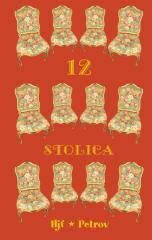
12 stolica
Eine satirische Schatzsuche im postrevolutionären Russland. Der ehemalige Adlige Ippolit Matwejewitsch Worojaninow und der Trickbetrüger Ostap Bender jagen Wertgegenständen hinterher und entlarven dabei die Gier und Absurditäten der sowjetischen Gesellsch
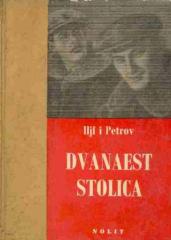
Dvanaest stolica
Glavni lik romana je domišljati prevarant Ostap Bender, koji je ovaj puta u potrazi za briljantima u jednoj od 12 tapeciranih stolica raznešenih širom Sovjetskog Saveza.
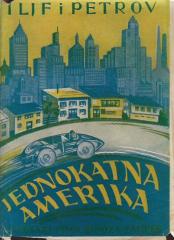
Jednokatna Amerika
After the great success of The Twelve Chairs and The Golden Calf, Ilyich and Petrov traveled the United States during the Great Depression and translated their observations into the novel One-Story America, continuing to write in a satirical style.
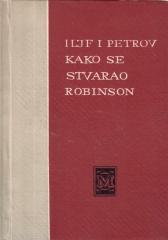
Kako se stvarao Robinson
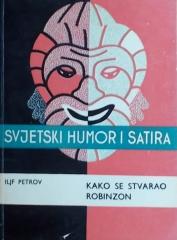
Kako se stvarao Robinzon
Delo prikazuje proces stvaranja književnog junaka i ismeva birokratiju, površnost i veštačko stvaranje „idealnih“ priča prema unapred određenim pravilima.
Nova Šeherezada
Prizemna Amerika
Poznati ruski spisateljski tandem krajem 1935. godine otisnuo se na putovanje automobilom duž Sjedinjenih Američkih Država, u kojima su ukupno proveli tri i pol mjeseca.
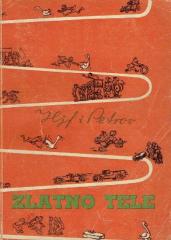
Zlatno tele
Zlatno tele (1931.) je briljantna satirička pikarska avantura, nastavak legendarnih 12 stolica, gdje se veliki kombinator Ostap Bender vraća u punom sjaju – šarmantan, ciničan, nepopravljivo lukav i uvijek korak ispred svih.
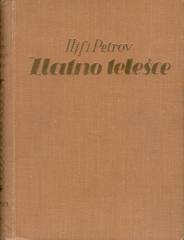
Zlatno telešce
Der Film „Das goldene Kalb“ (1931) erzählt die Geschichte des gerissenen Hochstaplers Ostap Bender, der im sowjetischen Russland während des ersten Fünfjahresplans einen geheimen Millionär sucht, um reich zu werden. Dabei stößt er auf die Absurdität der B