Erich Fromm

Erich Fromm (Frankfurt am Main, March 23, 1900 – Muralto, Switzerland, March 18, 1980) was a German-American psychoanalyst, social psychologist, and philosopher, as well as one of the most important figures in humanistic psychoanalysis. His work integrates psychology, philosophy, sociology, and ethics, focusing centrally on human freedom, love, alienation, and the individual's relationship with society.
He grew up in a Jewish family, studied sociology in Heidelberg—where he earned his doctorate in 1922—and subsequently trained in psychoanalysis. He was associated with the Frankfurt School and the Institute for Social Research, contributing to the latter's development by linking Freudian psychoanalysis with Marxian social critique. Following the Nazi rise to power, he emigrated to the United States and later worked in Mexico as well.
He gained international recognition with the book Escape from Freedom (1941), in which he explores why modern man, faced with insecurity and responsibility, might relinquish freedom in favor of authoritarian systems. In Man for Himself, he lays the foundations of humanistic ethics, while in The Sane Society, he analyzes the psychological consequences of capitalism, conformity, and alienation. His most famous work, The Art of Loving (1956), portrays love as an active capacity requiring knowledge, discipline, responsibility, and care, rather than merely a feeling. In the book To Have or to Be? (1976), he contrasts two fundamental modes of human existence: having and authentic living.
Other significant works include Psychoanalysis and Religion, The Forgotten Language, Marx's Concept of Man, The Anatomy of Human Destructiveness, The Art of Loving, and The Revolution of Hope.
Fromm criticized consumer society, authoritarianism, nationalism, and dehumanization, advocating for a society founded on solidarity, creativity, and human dignity. His accessible yet philosophically grounded works have left a lasting impact on psychology, social theory, and contemporary reflections on love, freedom, and the meaning of human life.
Naslovi u ponudi
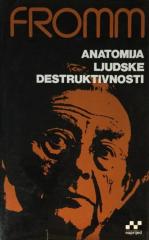
Anatomija ljudske destruktivnosti
In einer Welt, in der die Gewalt in ihren verschiedenen Formen ständig zunimmt, behandelt Erich Fromm dieses Problem in einem seiner bedeutendsten Bücher auf äußerst aufschlussreiche Weise.
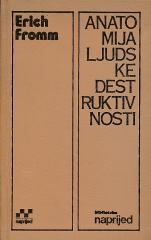
Anatomija ljudske destruktivnosti
In einer Welt, in der die Gewalt in ihren verschiedenen Formen ständig zunimmt, behandelt Erich Fromm dieses Problem in einem seiner bedeutendsten Bücher auf äußerst aufschlussreiche Weise.
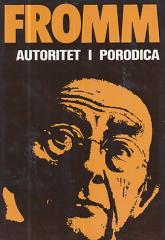
Autoritet i porodica
U djelu "Autoritet i porodica", Erich Fromm analizira transformaciju autoriteta i obitelji u modernom društvu. Predgovor je napisao Gvozden Flego, a knjiga sadrži i studiju "Revolucionarni karakter".
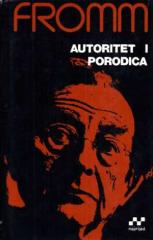
Autoritet i porodica
U djelu "Autoritet i porodica", Erich Fromm analizira transformaciju autoriteta i obitelji u modernom društvu. Predgovor je napisao Gvozden Flego, a knjiga sadrži i studiju "Revolucionarni karakter".

Bekstvo od slobode
Kultna psihoanalitička studija Ericha Fromma istražuje zašto se moderni čovjek, oslobodivši se tradicionalnih stega, često vraća totalitarnim ideologijama u potrazi za sigurnošću.
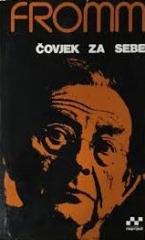
Čovjek za sebe: Istraživanje o psihologiji etike
Fromm explores psychoanalytic ethics, arguing that moral laws are based on human nature. He contrasts authoritarian and humanistic ethics, emphasizing the importance of freedom and productive character for the development of a healthy individual.
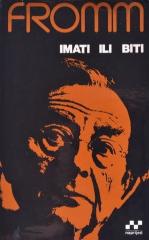
Imati ili biti
Das Buch ist eines der Hauptwerke der zweiten Hälfte des 20. Jahrhunderts. Laut Fromm führt es zwei Tendenzen seiner bisherigen Werke fort – die Analyse von Egoismus und Altruismus als zwei grundlegende Charakterorientierungen.
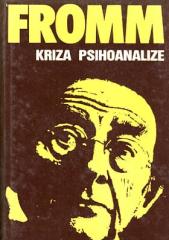
Kriza psihoanalize - Analitička socijalna psihologija i društvena teorija
In dem Buch übt Fromm scharfe Kritik an der zeitgenössischen Psychoanalyse. Er glaubt, dass sich die Psychoanalyse von Freuds ursprünglicher revolutionärer Vision entfernt und sich in ein technisches, oft steriles System verwandelt hat, das tiefere mensch
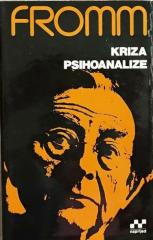
Kriza psihoanalize: Analitička socijalna psihologija i društvena teorija
Fromm analysiert die Krise des Freudianismus und plädiert für eine Synthese von Psychoanalyse und Marxismus. Er veranschaulicht, wie gesellschaftliche Strukturen den menschlichen Charakter prägen, und betont die Bedeutung des revolutionären Humanismus.

Marksovo shvatanje čoveka
Eine philosophische und soziologische Studie über Erich Fromm. Der Autor interpretiert das Denken von Karl Marx neu und hebt dabei dessen vernachlässigten Humanismus, seine Kritik an der Entfremdung und seine Vision von Befreiung und voller menschlicher E