Poziv na pogubljenje

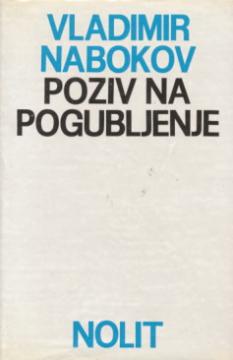
Poziv na pogubljenje

Vladimir Nabokov

There is no doubt that it is most attractive to read The Call to Execution as it appears to be written, as an anti-utopian or anti-totalitarian novel...

Nabokov could indirectly follow the rise of Stalinism in the Soviet Union and directly the rise of National Socialism in Germany; it is also the time of mass trials and public confessions in Moscow, as well as the first Nazi camps in Germany... People in that world are uniform individuals who can change names and functions without any trouble, blend into each other, disappear and reappear. They are the product of an era in which matter grew tired, aged and stopped, and together with it "time sweetly slumbered". Due to the loss of time, the spatial dimensions were also lost, so the world became similar to theater sets between which equally two-dimensional people move... They are "miserable ghosts", puppets with changeable parts, connected by "a single, monolithic, inhuman principle, the principle of general and unconditional cooperation and participation". This heinous principle of collaboration is the basis of all totalitarian regimes, and in this sense, as Mojnahan noted, this book should be read as prophetic. It foreshadowed all the horrors of the Nazi and concentration camps in the Second World War, in which the victim was forced to participate in torture and killing, to lose dignity, individuality and life itself... All this could really lead us to think that it is a real dystopian novel, but Nabokov consistently, from the very beginning, strives to destroy the conventions of this genre.

Prijevod
Ljiljana Mojsov
Urednik
Nikola Bertolino
Naslovnica
Žarko Rošulj
Dimenzije
19 x 12,5 cm
Broj strana
219
Nakladnik
Nolit, Beograd, 1988.
 
Tiraž: 4.000 primjeraka
 
Latinica. Tvrde korice s ovitkom.
Jezik: Srpski.

Jedan primjerak je u ponudi

Stanje:Korišteno, u odličnom stanju
Dodano u košaricu!
 

Zanima Vas i neka druga knjiga? Možete pretražiti našu ponudu pomoću tražilice ili prelistati knjige po kategorijama.

Možda će Vas zanimati i ovi naslovi

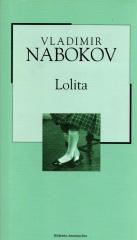
Lolita

Lolita

Vladimir Nabokov

„Lolita“, ein Roman des amerikanischen Schriftstellers Vladimir Nabokov, erschien erstmals 1955 in Paris auf Englisch. Der Autor selbst übersetzte „Lolita“ in seine russische Muttersprache.

Jutarnji list, 2004.
Hrvatski. Latinica. Tvrde korice s ovitkom.
9,26 €
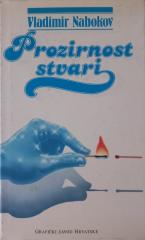
Prozirnost stvari

Prozirnost stvari

Vladimir Nabokov

Hinter dem ironisch-humorvollen Stil, mit dem er Hugh Person, den Helden des Romans, darstellt, webt Nabokov ein ernstes menschliches Drama.

Grafički zavod Hrvatske (GZH), 1980.
Hrvatski. Latinica. Tvrde korice s ovitkom.
5,98 €
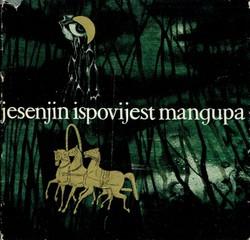
Ispovijest mangupa : izabrane pjesme i poeme

Ispovijest mangupa : izabrane pjesme i poeme

Sergej Jesenjin
Matica hrvatska, 1972.
Hrvatski. Latinica. Tvrde korice s ovitkom.
14,68 €
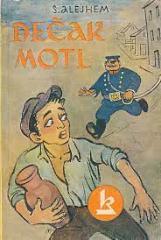
Dečak Motl

Dečak Motl

Šolem Alejhem
Džepna knjiga, 1956.
Srpski. Latinica. Broširano.
2,50 €
Jul 41

Jul 41

Grigory Baklanov
Izdavačko preduzeće "Rad", 1990.
Srpski. Latinica. Broširano.
2,50 €
Sabrana djela A. P. Čehova #1: Humoreske

Sabrana djela A. P. Čehova #1: Humoreske

Čehov
Anton Pavlovič Čehov

Ova knjiga obuhvata Čehovljeva dela iz perioda 1880-1885, odnosno humoreske, kratke priče i skečeve, počev od „Pisma učenom susedu“, koja je Čehov smatrao početkom svoje književne karijere.

Zora, 1959.
Hrvatski. Latinica. Tvrde korice s ovitkom.
9,54 €