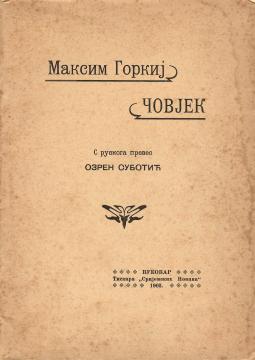
Čovjek
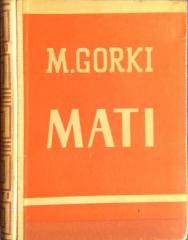
Maxim Gorkis „Der Mensch“, übersetzt von Ozren Subotić (Vukovar, 1905), ist ein philosophisches und literarisches Werk, das die Würde des Menschen, seine Schöpferkraft, seine geistige Freiheit und den Kampf gegen soziale Ungerechtigkeit verherrlicht.
Maxim Gorkis „Der Mensch“ ist eines seiner bekanntesten philosophisch-poetischen Werke aus seiner frühen Schaffensperiode. Das Buch stammt aus dieser Zeit, in der Gorki die Idee des Menschen als zentralen Wert des sozialen und geistigen Lebens entwickelte und dessen Fähigkeit zur Schöpfung, zur moralischen Erhebung und zum Widerstand gegen jede Form der Erniedrigung betonte.
Das Werk ist kein klassischer Roman oder eine Kurzgeschichte, sondern ein literarisch-philosophischer Text, in dem der Autor eine Art Hymne an den Menschen verfasst. Gorki sieht den Menschen als ein Wesen, das sich stetig weiterentwickelt, die Welt erforscht und danach strebt, die Grenzen von Armut, Unwissenheit und sozialer Ungleichheit zu überwinden. Im Zentrum seines Denkens steht die Überzeugung, dass der Mensch die größte Naturkraft ist, da er Vernunft, Schöpferkraft und die Fähigkeit besitzt, sein eigenes Schicksal zu gestalten.
Der Text ist durchdrungen von humanistischen und revolutionären Ideen, die für Gorkis Weltanschauung charakteristisch sind. Der Autor lehnt Passivität und Unterwerfung ab und betont die Bedeutung von Arbeit, Wissen und dem gemeinsamen Streben nach einer gerechteren Gesellschaft. Der Mensch wird als Träger des Fortschritts dargestellt, dessen Wert nicht von seiner sozialen Stellung, sondern von seiner inneren Stärke, seiner Würde und seiner Bereitschaft zum Handeln für das Gemeinwohl herrührt.
Stilistisch zeichnet sich das Werk durch starke rhetorische Ausdruckskraft, Pathos und symbolische Bilder aus. Gorki verwendet einen erhabenen Ton, aphoristische Gedanken und poetische Beschreibungen, um die Größe des menschlichen Geistes hervorzuheben. Dieser Ansatz verbindet Literatur, Philosophie und soziales Denken, weshalb Der Mensch oft als programmatischer Text seiner humanistischen Weltanschauung betrachtet wird.
Die Vukovar-Ausgabe von 1905 zeugt von der frühen Rezeption von Gorkis Werken unter südslawischen Lesern. Die Übersetzung von Ozren Subotić* trug dazu bei, das heimische Publikum mit den Ideen des russischen Realismus und der sozial engagierten Literatur vertraut zu machen, die zu Beginn des 20. Jahrhunderts einen starken Einfluss auf das kulturelle und intellektuelle Leben hatten.
Jedan primjerak je u ponudi