Miroslav Krleža
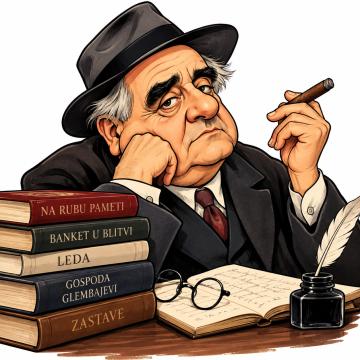
Miroslav Krleža (July 7, 1893 – December 29, 1981) was one of the most important Croatian writers of the 20th century – a poet, novelist, playwright, essayist and encyclopedist. He was born in Zagreb, educated at the Austro-Hungarian Military Academy, but quickly devoted himself to literature and intellectual activity. He was a strong critic of social injustice, petty bourgeoisie and political opportunism, which characterized much of his literature.
His work covers a wide range of genres. The most notable are the novel series about the Glembays (Gospoda Glembayev, U agoniji, Leda), and the epic novel The Return of Filip Latinovicz (1932). He also wrote essays, diaries, criticism, encyclopedic articles and poems such as those from the collection Pan.
Krleža's style is characterized by a rich vocabulary, complex sentences, intellectual depth and ironic distancing. He was a key figure in Croatian culture and one of the founders of the Lexicographic Institute (today LZ Miroslav Krleža). Despite political pressures, he remained faithful to intellectual autonomy.
Krleža's legacy is indispensable in the Croatian canon and indispensable in understanding modernity and the historical destiny of Croatia and Central Europe.
Titel im Angebot
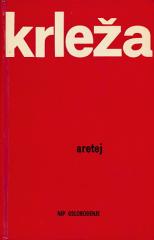
Aretej
Through the parallel destinies of an ancient and a modern physician, Miroslav Krleža’s late drama dissects the motif of the intellectual caught between political repression, the horrors of war, and his own conscience.
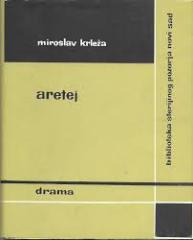
Aretej: drama
Krleža's drama with an extensive afterword by Branko Hećimović, biobibliographic contributions by Slavko Batušić and photos of scenes from "Areteja" performed by the National Theater, Belgrade.
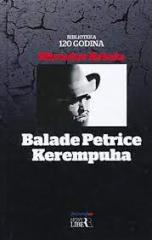
Balade Petrice Kerempuha
Miroslav Krleža's greatest poetic achievement and one of the most important works of Croatian literature. The ballads combine satire, irony, and lyrical-folkloric tones in a condemnation of violence and stupidity of government throughout the centuries.
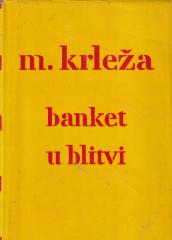
Banket u blitvi: Roman u tri knjige
The plot is set in Blitva, a fictional country in northeastern Europe, which after centuries of foreign rule and political instability became an independent state under the dictatorial rule of the cruel Lieutenant Barutanski.
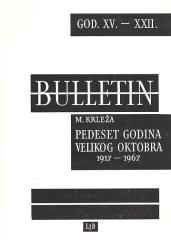
Bulletin - Pedeset godina Velikog oktobra 1917. - 1967.
In “Fifty Years of the Great October 1917–1967,” Miroslav Krleža writes about the October Revolution from the perspective of a writer who is ideologically close to it, but who never agreed with its transformation into a system of rigid truths.

Članci i polemike 1: Ratne teme
A collection of Krleža's journalistic texts, commentaries and analyses written during and immediately after World War I, important for understanding his intellectual development and the basis for his later works.
Članci i polemike 2: Sa uredničkog stola
The collection Articles and Polemics 2: From the Editorial Desk includes essays, criticisms, and polemical texts written during Krleža's engagement as editor of various literary magazines, such as Književna republika and Pečate.
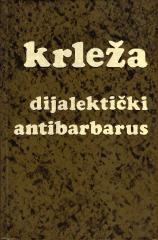
Dijalektički antibarbarus
Krleža's most famous polemical text, in which he sharply attacks dogmatic vulgar Marxism and bad tendentious literature within the left, defending artistic freedom and intellectual autonomy. The culmination of the conflict on the literary left.
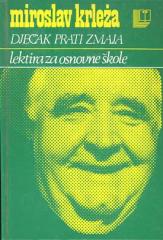
Dječak prati zmaja
"The Boy Follows the Dragon" is a book that takes us on a fantastic journey and encourages us to think about life and the world in a different way.
Dnevnik 1: Dnevnik 1914 - 17 (Davni dani I)
The 1914–17 diary records Krleža's writings from the First World War: personal dilemmas, pacifism, conflict with the militarism of the Monarchy, and intellectual maturation in the years of the collapse of the old world.