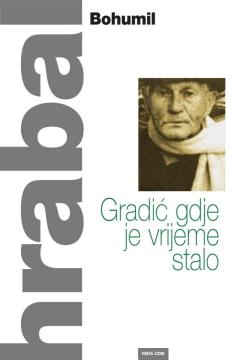
Gradić gdje je vrijeme stalo

Gradić gdje je vrijeme stalo

Bohumil Hrabal

Bohumil Hrabal, a Czech writer known for his lyrical grotesque and humor, in his novel The Town Where Time Stood Still evokes childhood in the small town of Libeň (part of Prague), where time seems to stand still in a magical but melancholic world.

The narrator, the writer's alter ego, recalls the 1920s: his father's brewery, his mother's love of animals, street adventures and family secrets, where everyday life turns into a fairy tale full of wonder and sadness.

The novel is a series of fragmentary images: a boy plays in the brewery gardens, watches the royal train, meets eccentric characters such as a kneeling uncle or a grandmother who tells the story. The time that has "stood still" symbolizes the lost idyll in the face of industrialization and wars - the small town is a microcosm of Europe, where Czech tradition, Jewish culture and German influences mix. Hrabal's style - stream of consciousness, hyperbole, love of detail - creates a poetic symphony: laughter provokes tears, and nostalgia bites the heart.

The themes are the transience of childhood, the power of the story, the conflict of idyll and reality. As part of Hrabal's "autobiographical" cycle (First Haircut, Long Live Yugoslavia), the novel celebrates life as a "small town" in the soul, where time does not stop, but is transformed into art. A masterpiece for lovers of Czech prose, it reminds us: "Life is a dream, and a dream is eternity."

Titel des Originals
Mastecko, kde se zastavil čas
Übersetzung
Sanja Milićević Armada
Editor
Nermina Husković
Maße
21,5 x 14 cm
Seitenzahl
151
Verlag
Hena Com, Zagreb, 2006.
 
Latein Schrift. Taschenbuch.
Sprache: Kroatisch.
ISBN
978-9-53259-004-3

Angeboten wird ein Exemplar

Zustand:Gebraucht, in ausgezeichnetem Zustand
Zum Warenkorb hinzugefügt!
 

Interessieren Sie sich für ein anderes Buch? Sie können das Angebot über unsere Suchmaschine suchen und finden oder Bücher nach Kategorien durchsuchen.

Diese Titel könnten Sie auch interessieren

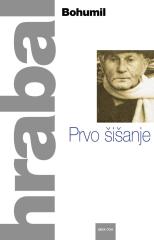
Prvo šišanje

Prvo šišanje

Bohumil Hrabal

The First Haircut, a short story written in 1970 and published in 1976, is the first in a series of prose pieces by Bohumil Hrabal describing Nymburk, the town where he spent his childhood. In 1981, The First Haircut was adapted for the screen by Jiry Men

24 sata, 2007.
Kroatisch. Latein Schrift. Taschenbuch.
7,24
Amandino vjenčanje

Amandino vjenčanje

Jenny Colgan

A romantic comedy about friendship, love, and the chaotic attempts to save a good man from a bad marriage. A chick-lit hit, it reminds us that friendship saves more than any plan, and love comes unexpectedly.

Znanje, 2001.
Kroatisch. Latein Schrift. Taschenbuch.
5,36
Dok ležah na samrti

Dok ležah na samrti

William Faulkner

Faulkner's 1930 novel, a classic example of modernist literature. It is often compared to Joyce's "Ulysses" for its innovative structure, but is more accessible due to its focus on family.

Rad, 1985.
Kroatisch. Latein Schrift. Taschenbuch.
3,26
Seks skandal 2: Političari u krevetu

Seks skandal 2: Političari u krevetu

Izabela D.

Nastavak ultimativnog hita Seks skandal: Ispovijedi zagrebačke manekenke, Seks skandal 2: Političari u krevetu, razotkriva moralno naličje hrvatskih političara koji javno glume nesebične borce za opće dobro, a privatno se prepuštaju požudama.

24 sata.
Kroatisch. Latein Schrift. Taschenbuch.
2,36
Magična ljubavna kutijica

Magična ljubavna kutijica

Santa Montefiore

Magična ljubavna kutijica (2002.) prati životnu priču Federice Campione, koja započinje u Vini del Maru, Čile, ljeta 1982. Montefiore stvara epsku priču o rastu, gdje magija nije samo u kutiji, već u hrabrosti da se otpusti prošlost.

Mozaik knjiga, 2006.
Kroatisch. Latein Schrift. Hardcover.
7,34
Andrićeva lestvica užasa

Andrićeva lestvica užasa

Svetislav Basara

Srpski pisac poznat po satiričnim romanima, u Andrićevoj lestvici užasa secira balkanski mentalitet kroz parabolu jugonostalgije i nacionalnih mitova. Naziv aludira na Ivu Andrića kao lakmus-papir za kritiku – Balkanci ga svojataju ili odbacuju po volji.

24 sata, 2021.
Serbisch. Latein Schrift. Taschenbuch.
11,56