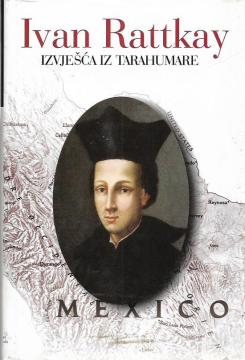
Izvješća iz Tarahumare
Das Buch enthält drei lateinische Berichte des kroatischen Jesuiten, Adligen und Entdeckers Ivan Rattkay (Ratkaj, 1647–1683), geboren in Ptuj (heute Slowenien), die von der Mission in Nordmexiko an den Provinzial der österreichisch-tschechischen Jesuitenp
Rattkay, ein ausgebildeter Mathematiker und Philosoph, gab seine akademische Laufbahn auf und reiste 1678 in die Neue Welt. Nach der Überquerung des Atlantiks und Mexikos erreichte er 1680 die Tarahumara-Region (das heutige Chihuahua), wo er bis zu seinem Tod 1683 in der Mission Jesús Carichic (vermutlich durch Vergiftung) als Missionar unter den Tarahumara-Indianern (Rarámuri) wirkte.
Der erste Bericht beschreibt die lange Reise: von Europa über den Atlantik, Veracruz in Mexiko zu den nördlichen Missionen – mit Berichten über Schiffbrüche, die spanische Kolonialherrschaft und die Gefahren, denen er ausgesetzt war.
Der zweite und dritte (wichtigste) Bericht beschreiben detailliert die Geografie der Tarahumara: die Sierra Madre Occidental, Schluchten (Barrancas), Flüsse, das Klima, Bodenschätze (Silber), Fauna und Flora. Rattkay war der erste Europäer, der die Region präzise kartierte – seine Karte von 1683 verzeichnet Missionen, spanische Forts und indianische Siedlungen.
Die wertvollsten ethnografischen Teile sind: eine Beschreibung der Tarahumara – ihrer körperlichen Ausdauer (bekannte Ultramarathonläufer), ihrer Kleidung, ihrer Behausungen (Höhlen und Hütten), ihrer Bräuche, Tänze, Rituale (mit Peyote und Alkohol), ihres Familienlebens, ihrer Kriegsführung, ihrer Glaubensvorstellungen (eine Mischung aus Animismus und Christentum), ihrer Sprache und ihrer Sozialstruktur. Rattkay schildert sie als sanftmütig und gastfreundlich, aber auch als widerständig gegenüber der Christianisierung – er kritisiert die spanischen Kolonisten wegen Ausbeutung und Gewalt.
Die Berichte sind in einem barocken Stil verfasst: objektiv, wissenschaftlich, mit missionarischem Eifer, aber auch mit realistischen Darstellungen der Schwierigkeiten der Mission (Krankheiten, Aufstände, Isolation). Rattkay starb jung (mit 36 Jahren), vermutlich als Opfer einer Verschwörung gegen die Missionare.
Das Buch (mit einer einleitenden Studie von Mija Korade) ist eine wichtige Quelle für die Geschichte Mexikos, die Ethnologie der Tarahumara und die kroatischen Beiträge zur Erforschung der Neuen Welt – die erste detaillierte europäische Beschreibung dieses Volkes und dieser Region.
Angeboten wird ein Exemplar