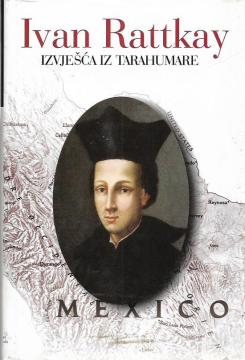
Izvješća iz Tarahumare
The book contains three Latin reports by the Croatian Jesuit, nobleman and explorer Ivan Rattkay (Ratkaj, 1647–1683), born in Ptuj (today Slovenia), sent to the provincial of the Austro-Czech Jesuit province from the mission in northern Mexico.
Rattkay, a trained mathematician and philosopher, abandoned his academic career and went to the New World in 1678. After traveling across the Atlantic and Mexico, he arrived in the Tarahumara region (present-day Chihuahua) in 1680, where he worked as a missionary among the Tarahumara Indians (Rarámuri) until his death in 1683 at the Jesús Carichic mission (probably poisoned).
The first report describes the long journey: from Europe across the Atlantic, Vera Cruz, Mexico to the northern missions – with accounts of shipwrecks, Spanish colonial rule and dangers.
The second and third (most important) reports describe in detail the geography of the Tarahumara: the Sierra Madre Occidental mountains, canyons (barrancas), rivers, climate, mineral resources (silver), fauna and flora. Rattkay was the first European to accurately map the region – his map from 1683 indicates missions, Spanish forts and Indian settlements.
The most valuable ethnographic parts are: a description of the Tarahumara – their physical endurance (famous ultramarathoners), clothing, houses (caves and huts), customs, dances, rituals (with peyote and alcohol), family life, warfare, beliefs (a mixture of animism and Christianity), language and social structure. Rattkay portrays them as gentle, hospitable, but also stubborn towards Christianization – he criticizes the Spanish colonists for exploitation and violence.
The reports are written in a baroque style: objective, scientific, with missionary zeal, but also realistic reviews of the difficulties of the mission (diseases, rebellions, isolation). Rattkay dies young (36 years old), probably as a victim of a conspiracy against the missionaries.
The book (with an introductory study by Mija Korade) is an important source for the history of Mexico, the ethnology of the Tarahumara and Croatian contributions to the exploration of the New World – the first detailed European description of this people and region.
One copy is available