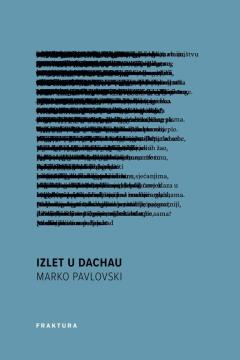
Izlet u Dachau
In Trip to Dachau, there is no tolerance for the “infatuated,” for those who “didn't know,” for those who “repent” with a fat fig in their pocket. She openly hates – hatred itself.
Slavoj Žižek writes that “Adorno should be corrected: it is not poetry but prose that became impossible after Auschwitz. Poetic recollection of the unbearable atmosphere of the camp is much more credible than realistic prose, which fails to do so.” Marko Pavlovski does not, of course, write his verses from the perspective of what he experienced, but he remarkably successfully preserves in his poetic writing clear traces of the most terrible event in world history, keeping in mind above all the fate of the so-called “little man”. Pavlovski uses the temporal distance between what happened and the present in a poetically truly intriguing way – horrors remain horrors forever and here time does not flow, but rather constantly condenses into a black hole of eternal trauma, and not entirely explicitly, but completely affectingly, he poses and questions the crucial question of today’s completely indifferent time.
One copy is available