
Obiteljska sreća

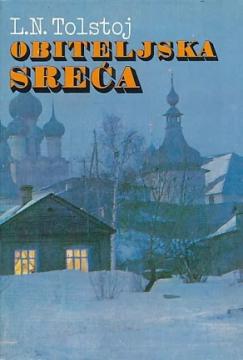
Obiteljska sreća

Lav Nikolajevič Tolstoj

Family Happiness (1859.) is a significant work of Tolstoy's early work. Unlike his later moralistic works, here Tolstoy offers a tender, intimate story, focused on personal relationships, which makes it unique in his oeuvre.

In 19th-century Russia, seventeen-year-old Masha, after the loss of her parents, feels the weight of loneliness in her country home. Her life is illuminated by the arrival of Sergei Mikhailovich, a family friend and a more mature man, whose presence brings warmth and hope. Family Happiness, one of Leo Tolstoy’s more intimate works, follows Masha’s emotional and spiritual evolution through love and marriage.

Masha falls in love with Sergei, captivated by his wisdom and tenderness. Their relationship blossoms, but marriage brings unexpected challenges. Masha, full of youthful ideals, dreams of a passionate life, while Sergei seeks the peace of country life. Moving to the city further complicates matters: Masha is drawn to the glamour of social circles, while Sergei remains true to simplicity. Their conflicts reveal different perspectives on love and happiness, and Masha goes through an internal struggle between personal desires and family duties. Ultimately, through the birth of children and reconciliation, Masha finds a deeper meaning in family life, realizing that happiness lies in accepting reality, not in romantic ideals.

Family Happiness provides a bridge between his autobiographical works (Childhood, Boyhood, Youth) and his later epics (War and Peace, Anna Karenina). Inspired by Tolstoy's own relationship with Valeria Arsenyeva, the novel explores themes of love, marriage, and female emancipation, anticipating the complex psychological portraits in his later works.

Translation
Vladimir Babić, Vaso Bogdanov, Zlatko Crnković, Ivan Kušan, Malik Mulić i Roman Šovary
Editor
Jakša Kušan
Graphics design
Alfred Pal
Dimensions
20 x 14 cm
Pages
520
Publisher
Nakladni zavod Matice hrvatske, Zagreb, 1979.
 
Latin alphabet. Hardcover with dust jacket.
Language: Croatian.

One copy is available

Condition:Used, excellent condition
 

Are you interested in another book? You can search the offer using our search engine or browse books by category.

You may also be interested in these titles

Ana Karenjina I-II

Ana Karenjina I-II

Lav Nikolajevič Tolstoj

The novel that Dostoevsky considered flawless and Faulkner called the best novel ever written, is Leo Tolstoy's monumental work that provides a comprehensive account of nineteenth-century Russian society.

Europapress holding, 2010.
Croatian. Latin alphabet. Hardcover with dust jacket.
The book consists of two volumes
2.85
Rat i mir 3

Rat i mir 3

Lav Nikolajevič Tolstoj
Nakladni zavod Matice hrvatske, 1979.
Croatian. Latin alphabet. Hardcover with dust jacket.
5.98
Rat i mir 2

Rat i mir 2

Lav Nikolajevič Tolstoj
Nakladni zavod Matice hrvatske, 1979.
Croatian. Latin alphabet. Hardcover with dust jacket.
5.98
Poniženi i uvređeni

Poniženi i uvređeni

Fjodor Mihajlovič Dostojevski

The first great novel in which Dostoevsky began to explore some themes or characters that he would develop in his later works.

Nolit, 1966.
Serbian. Latin alphabet. Hardcover.
4.88
Kira Georgijevna

Kira Georgijevna

Viktor Nekrasov

The novella was published for the first time in 1961 in the magazine Novij mir and aroused anger among critics, pointing out that it is only "about the narrow, intimate experiences of the heroine".

Svjetlost, 1963.
Croatian. Latin alphabet. Paperback.
4.38
Druga generacija

Druga generacija

Howard Fast
Znanje, 1986.
Croatian. Latin alphabet. Hardcover with dust jacket.
The book consists of two volumes
8.36