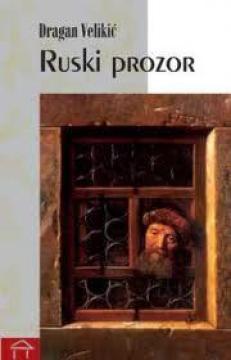
Ruski prozor

Ruski prozor

Dragan Velikić

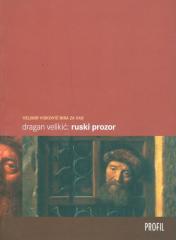
In the novel Russian Window, Dragan Velikić creates a three-part "omnibus novel" about exile, questioning identity, and the transience of life. The first chapter is narrated by Danijel, an aging conductor who introspectively questions his own destiny; the second forms the core of the narrative, following Rudi Stupar, a Vojvodina native and unsuspecting actor, who flees Belgrade in the chaos of the 1990s and passes through Budapest, Hamburg, and other European centers. The final, third part consists of a series of short confessions by other characters, who comment on Rudi's life and leave him in a different light.

Through a complex narrative structure - fragmented memories and asymmetrical narrative units - Velikić builds an atmosphere of melancholic reflection, where Russian Window represents a "photograph": a small account of life, a cross-section of inner aspirations and memories. The style is refined and precise, often poetic, so the prose balances between intellectual essay and intimate confession.

The themes touch on exile, the search for a spiritual home, and the establishment of a balance between personal destiny and the broader historical dynamics. Throughout his wandering existence, Rudi carries an introspective burden of nostalgia and failure, at the same time imbued with humor and self-irony as a resistance against his petty-bourgeois fate.

Editor
Predrag Marković
Graphics design
Dušan Šević
Dimensions
20.5 x 13.5 cm
Pages
303
Publisher
Stubovi kulture, Beograd, 2008.
 
Latin alphabet. Paperback.
Language: Serbian.
ISBN
978-8-67979-221-1

One copy is available

Condition:Used, excellent condition
 

Are you interested in another book? You can search the offer using our search engine or browse books by category.

You may also be interested in these titles

Ruski prozor

Ruski prozor

Dragan Velikić

Perhaps the greatest virtue of Velikić's writing, which culminated in this novel, is his extraordinarily refined feeling for life's details, which he depicts and evokes with an almost shamanic power of materialization.

Profil International, 2008.
Croatian. Latin alphabet. Paperback.
6.98
Danteov trg

Danteov trg

Dragan Velikić

As in Velikić's previous novels, the heroes weave analogous and often intertwined destinies of frustrated Central European citizens and intellectuals, the topography is very diverse, but also recognizable.

Stubovi kulture, 1998.
Serbian. Latin alphabet. Paperback.
6.725.38
Eva Luna

Eva Luna

Isabel Allende

Eva Luna is a novel about a poor storyteller who weaves lives with words, written by Isabel Allende, the founder of Latin American magical realism. Published after the success of The House of the Spirits, this whirlwind of adventure combines love, revolut

Znanje, 1990.
Croatian. Latin alphabet. Hardcover with dust jacket.
8.36
Aurorin poticaj

Aurorin poticaj

Erich Hackl

The work is based on a true event that occurred in Spain in 1933: Aurora Rodriguez killed her daughter Hildegart, a famous fighter for women's emancipation and a cult figure on the political scene of the time.

Mladost, 1990.
Croatian. Latin alphabet. Hardcover with dust jacket.
4.98
V.

V.

Thomas Pynchon

The novel represents a journey into an alternative world – a world that we all belong to from time to time, but of which we would not want to be a part, a world of paranoia and alienation that we are not entirely sure is just an alternative or the bare tr

Čarobna knjiga, 2010.
Serbian. Latin alphabet. Paperback.
21.98
Štefica Cvek u raljama života

Štefica Cvek u raljama života

Dubravka Ugrešić

Do you like "lovelies"? Whatever you think about them, you'll enjoy this superb pastiche of trivial romance novels.

Mladinska knjiga, 1990.
Croatian. Latin alphabet. Hardcover with dust jacket.
4.94