Dosada
Dino, a wealthy Roman painter, suffers from a deep existential boredom - an inability to feel reality. He leaves his mother's villa, moves into a studio and enters into an obsessive relationship with the young Cecilia, which brings him jealousy and crisis
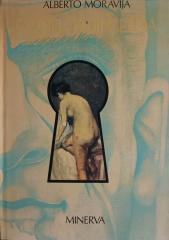
Boredom is one of Alberto Moravia's most intimate and philosophical novels, published in 1960, in which the existential theme of alienation and the impossibility of an authentic relationship with reality is explored through the character of Dino, a 35-year-old painter from a wealthy Roman family. The novel is structured as a monologue – Dino tells his story retrospectively, explaining what "boredom" means to him.
Dino lives with his mother in a luxurious villa on the Appian Way, but feels a deep emptiness: things and people seem unreal to him, "avvizziti" (withered), like a flower that withers in an instant. Boredom is not ordinary boredom, but a metaphysical state – a lack of relationship with the world, a failure to "own" reality. He paints, but cannot create anything of value; instead, he destroys canvases. In order to escape, he leaves his mother (who symbolizes the bourgeois world of values and materialism) and moves into a dilapidated studio in Via Margutta.
There he meets Cecilia, a young, simple, erotically attractive girl – the former mistress of the painter Balestrieri's neighbor. A passionate but mechanical relationship begins: Dino uses her as a model and lover, pays her, tries to "possess" her in order to break through his boredom. But Cecilia remains unfathomable – spontaneous, pragmatic, unburdened by intellectual burdens. When she starts to be late for meetings and confesses that she is seeing another man (poor Luciani), Dino sinks into jealousy and obsession. Instead of freeing him, this inability to possess binds him even more to her – his boredom turns into a pathological passion.
The climax comes when Cecilia asks for money to go on holiday with another, and Dino, in despair, deliberately crashes his car into a tree. Near death changes him: in the hospital he realizes that boredom was an illusion, that reality exists independently of his "possession". The epilogue shows reconciliation – Dino accepts the imperfection of life and awaits Cecilia's return without illusions.
Here Moravia dissects the existential crisis of the bourgeoisie: boredom as a consequence of privilege, the impossibility of authenticity, sex as an escape and a trap, the obsession with possession (of money, the body, reality). The novel is a critique of materialism and intellectual alienation, influenced by Sartre and Camus' absurdism. The style is dry, introspective, with long philosophical passages on the nature of boredom (metaphors such as a blanket that is too short or an electrical outage). Adapted into the film The Empty Canvas (1963) with Bette Davis and Horst Buchholz. Boredom is the culmination of Moravia's trilogy on alienation (along with Indifferent People and Life Inside), and remains a powerful portrait of modern man trapped in his own emptiness.
No copies available
The last copy was sold recently.