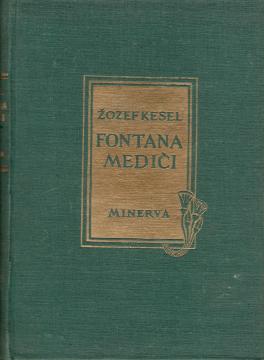
Putevi nesreće I: Fontana Mediči
Paris on the eve and during World War I. Young Richard Dalleau, full of ambition and a hunger for life, embarks on a journey of success, love and moral trials that will lead him into a vortex of misfortune.
The Medici Fountain is the first part of Joseph Kessel's great tetralogy The Tour of Misfortune (Le Tour du malheur), published in 1950. It is considered one of Kessel's most significant and personal works, partly autobiographical.
The novel follows the young Richard Dalleau, an energetic and ambitious young man from a modest but strong medical family in Paris. Surrounded by the Medici Fountain in the Luxembourg Gardens – a meeting place and symbol of youth – Richard enters adulthood full of idealism, passion and an insatiable desire for success. He wants fame, money and a glamorous life, far from the modesty of his parents.
Through his friendship with Etienne Bernan, the son of an influential politician, Richard ventures into the world of high society, political intrigue, bohemian circles and passionate love. The First World War takes them both to the front, where they face the horrors of war, heroism and meaninglessness. Upon his return, Richard becomes a lawyer and embarks on a rise that increasingly distances him from the moral values of his childhood.
Kessel masterfully paints the Paris of that turbulent era – the contrast between bourgeois decency and decadence, ideals and cynicism, love and betrayal. The novel is rich, epic, full of vivid characters and deep inner conflicts. The style is dynamic, masculine and emotional, typical of Kessel – a great storyteller, adventurer and witness of his time.
The Medici Fountain is a story about uninhibited youth, about the price of ambition and about a generation that went through the hell of war only to face new forms of misfortune in peace. It is part of a cycle that includes three more volumes (The Bernan Affair, Pink Laurels and The Plaster Man).
One copy is available