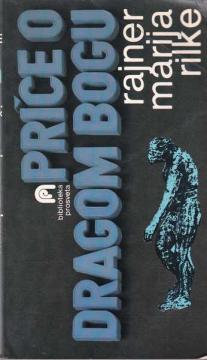
Priče o dragom Bogu

Priče o dragom Bogu

Rainer Maria Rilke

Rilke's Tales of a Dear God features a series of lyrical prose pieces about faith, childhood, and poverty, and occupy an important place in his early phase, in the transition from symbolism to more mature poetics.

Stories about the Dear God belong to the early period of Rainer Maria Rilke's creative work and are among the most interesting prose works of his youth. It is a book composed of a series of short, interconnected stories and lyrical prose in which faith, childhood, poverty, loneliness, kindness and the search for inner meaning are intertwined.

Instead of a strict religious or theological approach, Rilke presents God closely and intimately - as a silent presence that is sensed in human suffering, tenderness, modesty and inner experience. It is precisely this softness of tone, spiritual sensitivity and sense of the ineffable that give the book a special warmth and distinguish it from classical narrative prose.

In form, this work is on the border between story, legend, meditation and poetic prose. Rilke does not build tension through a grand plot, but through atmosphere, the rhythm of the sentence and the symbolic power of the scene. In these texts, the characteristics that would later make him one of the most important poets of European modernity are already clearly recognizable: a focus on inner life, a sense of silence and spiritual depth, and a distinct musicality of language.

The important place of the book in Rilke's oeuvre stems precisely from this early clarity of his voice. Stories about the Dear God shows how, at the beginning of his literary journey, the themes that would permanently occupy him were taking shape - the inner man, the relationship between the visible and the invisible, the presence of the sacred in everyday life, and the search for a deeper meaning of existence.

This is why this work is interesting not only as an early Rilke's prose work, but also as an important insight into the emergence of his recognizable poetics. For the reader, it remains a gentle, thoughtful, and spiritually refined book, and for lovers of literature, a valuable title that occupies a special place in the development of one of the key authors of modernity.

Original title
Geschichten vom lieben Gott
Translation
Vera Kolaković
Editor
Josip Babić
Graphics design
Dobrilo M. Nikolić
Dimensions
20 x 12 cm
Pages
180
Publisher
Prosveta, Beograd, 1988.
 
Latin alphabet. Paperback.
Language: Serbian.

One copy is available

Condition:Used, excellent condition
 

Are you interested in another book? You can search the offer using our search engine or browse books by category.

You may also be interested in these titles

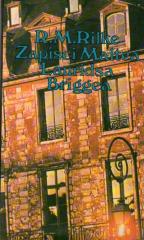
Zapisci Maltea Lauridsa Briggea

Zapisci Maltea Lauridsa Briggea

Rainer Maria Rilke

Rainer Maria Rilke's The Notebooks of Malte Laurids Brigge (1910), his only novel, is an introspective and poetic account of the inner turmoil of a young Danish nobleman, Malte Laurids Brigge, in Paris.

Sveučilišna naklada Liber (SNL), 1979.
Croatian. Latin alphabet. Hardcover with dust jacket.
5.32 - 5.46
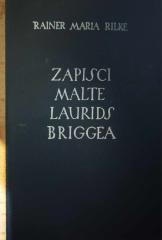
Zapisci Malte Laurids Briggea

Zapisci Malte Laurids Briggea

Rainer Maria Rilke

Rainer Maria Rilke's The Notebooks of Malte Laurids Brigge (1910), his only novel, is an introspective and poetic account of the inner turmoil of a young Danish nobleman, Malte Laurids Brigge, in Paris.

Narodna knjižara, 1944.
Croatian. Latin alphabet. Hardcover.
8.22
I ne reče ni reči

I ne reče ni reči

Heinrich Böll

In Boll's novels, one of the central themes is the attempt to preserve basic moral values ​​in a time of terror, as well as in a period of material prosperity and corruption.

Svjetlost, 1965.
Serbian. Latin alphabet. Paperback.
3.22 - 3.98
Josip i njegova braća III: Josip u Egiptu

Josip i njegova braća III: Josip u Egiptu

Thomas Mann

The third part of the tetralogy by German Nobel Prize winner Thomas Mann, Joseph and His Brothers, is entitled Joseph in Egypt. This tetralogy is considered one of the most important works by Thomas Mann, as well as by German literature of the twentieth c

Fraktura, 2010.
Croatian. Latin alphabet. Hardcover with dust jacket.
34.62
Poezija i zbilja

Poezija i zbilja

Johann Wolfgang Goethe

Goethe's greatest autobiographical prose, written between 1811 and 1833, covers his life from his birth in 1749 in Frankfurt to 1775, when he went to Weimar at the invitation of Duke Karl August.

Matica hrvatska, 1953.
Croatian. Latin alphabet. Hardcover with dust jacket.
18.42
Doba života, doba smrti / Slavoluk pobjede / Ljubi bližnjega svoga

Doba života, doba smrti / Slavoluk pobjede / Ljubi bližnjega svoga

Erich Maria Remarque

Selected works of Remarque in three volumes.

SKD Prosvjeta, 1963.
Croatian. Latin alphabet. Hardcover.
The book consists of 3 volumes
14.32