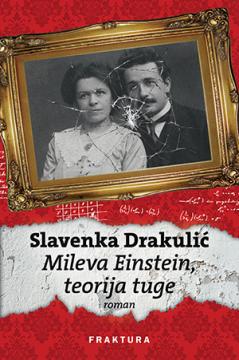
Mileva Einstein, teorija tuge

Mileva Einstein, teorija tuge

Slavenka Drakulić

In the novel "Mileva Einstein, Theory of Sorrow", Slavenka Drakulić brought the genius and his family to life. A palpable, real, full of life, but also depression, melancholy and love, Mileva appeared before the reader...

When, at the dawn of the First World War, she had just arrived in Berlin with her sons, where her husband, the most famous scientist of the twentieth century, Albert Einstein, had just received a job, she received a letter with the terms of their mutual life, Mileva Einstein's already fractured life was completely turned upside down. She remains alone, with two sons, with a huge burden of sadness that she carries inside her, with all the falls and breakdowns that she has had in her life and that she is yet to experience.

A person who was destined for the greatest scientific achievements, a genius mathematician, the first woman at the polytechnic faculty of the University of Zurich, always second and different, Mileva Einstein born Marić, from a rich family in Vojvodina, is almost paradigmatic in her destiny when we think about the position of women.

Her theory of grief is as difficult as any theory of relativity, but also much more common than it. The baggage of sadness that she carried from her earliest youth until her death, in which painful moments were only added over time, from children's limping and mocking, through love and a failed marriage with Albert, to the death of a child, a sick sister, unfinished college, a poor financial situation and serious illness of the youngest son, is a burden that every reader can understand.

Urednik
Seid Serdarević
Naslovnica
Maja Glušić
Dimenzije
21 x 14 cm
Broj strana
207
Nakladnik
Fraktura, Zaprešić, 2017.
 
Latinica. Tvrde korice s ovitkom.
Jezik: Hrvatski.
ISBN
978-9-53266-814-8

Nema primjeraka u ponudi

Poslednji primjerak je nedavno prodan.


Zanima Vas i neka druga knjiga? Možete pretražiti našu ponudu pomoću tražilice ili prelistati knjige po kategorijama.

Možda će Vas zanimati i ovi naslovi

Mramorna koža

Mramorna koža

Slavenka Drakulić

The novel, written in the first person, describes the complex, distant relationship between a sculptor (the narrator) and her mother. The main characters are the sculptor, a beauty mother obsessed with purity and bodily blemishes, and a stepfather, who en

Grafički zavod Hrvatske (GZH), 1989.
Hrvatski. Latinica. Tvrde korice s ovitkom.
8,82
Život u pričama

Život u pričama

Ivana Bodrožić, Slavenka Drakulić, Rujana Jeger, Tisja Kljaković Braić, Maša Kolanović, Julijana ...

Strong women for strong women

Profil Knjiga, 2021.
Hrvatski. Latinica. Broširano.
6,22
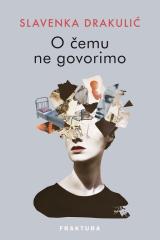
O čemu ne govorimo

O čemu ne govorimo

Slavenka Drakulić

Can you face the taboos of modern society? Old age, illness, weakness. Slavenka Drakulić bravely enters into topics we are reluctant to talk about.

Fraktura, 2024.
Hrvatski. Latinica. Tvrde korice s ovitkom.
14,62
Deobe

Deobe

Dobrica Ćosić

Deobe is a novel about the tragic division of Serbs into Chetniks and Partisans during World War II. Winner of the NIN Award, it is part of a wider epic trilogy, inspired by Ćosić's experiences and historical documents.

Prosveta, 1963.
Hrvatski. Latinica. Tvrde korice s ovitkom.
13,74
Dok ležah na samrti

Dok ležah na samrti

William Faulkner

Faulkner's 1930 novel, a classic example of modernist literature. It is often compared to Joyce's "Ulysses" for its innovative structure, but is more accessible due to its focus on family.

Rad, 1985.
Hrvatski. Latinica. Broširano.
3,26
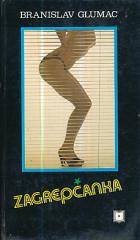
Zagrepčanka

Zagrepčanka

Branislav Glumac

Branislav Glumac published a novel without periods or commas in 1974, as the relentless stream of thought of a young rebel. Published in socialist Yugoslavia, the work caused a scandal with its openness and became a classic about generational rebellion.

IROS, 1986.
Hrvatski. Latinica. Tvrde korice.
8,22 - 8,24