Triologija: Molloy, Malone umire, Neimenjivi

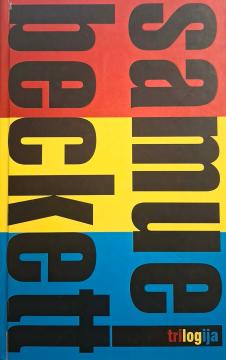
Triologija: Molloy, Malone umire, Neimenjivi

Samuel Beckett

He has marked the contemporary era like few others, and his heroes or "heroes" with their emotional and moral dilemmas, weighed down by existential anxiety and news of cataclysms and possible apocalypses, are closer to us than ever.

Beckett's trilogy consists of three novels: Molloy (1951), Malone Dies (1951), and The Unnameable (1953). These are key works of 20th-century modernist and existentialist literature, in which Beckett gradually dismantles classical plot, character identity, and narrative structure itself.

  1. Molloy

The novel is divided into two parts.

The first part is narrated by Molloy, a vagrant trying to find his mother. His journey is chaotic, full of repetitions, digressions, and memory lapses. He physically deteriorates, moving with increasing difficulty (first walking, then cycling, finally crawling), and the narration becomes increasingly unreliable. The second part follows Moran, a detective who is assigned to find Molloy. As the plot progresses, Moran becomes more and more like Molloy – physically and mentally deteriorating, his world falling apart, and the line between pursuer and pursued becomes blurred.

  1. Malone Dies

The main character, Malone, lies motionless in a room, waiting to die. He passes the time by telling stories and making lists of his remaining belongings. He tries to create characters (e.g. Sapo/Macmann), but his narration constantly gets out of hand. The line between Malone and his characters becomes blurred. The novel gradually disintegrates into fragmentary thoughts and interruptions, until an abrupt and incomplete ending.

  1. The Unnameable

The most radical part of the trilogy. There is no classic plot. A voice without a body, without an identity and without a clear position in space speaks in a long, almost uninterrupted monologue. The narrator questions his own existence, doubts all the identities attributed to him (Molloy, Malone, etc.) and tries to reach silence – but cannot stop talking. He ends with the famous line: “I must go on. I cannot go on. I will go on.”

Naslov izvornika
Molloy, Malone dies, The unnamable
Prijevod
Gordana V. Popović
Urednik
Krunoslav Jajetić
Naslovnica
Kruno Jajetić
Dimenzije
24 x 16 cm
Broj strana
390
Nakladnik
Šareni dućan, Koprivnica, 2014.
 
Latinica. Tvrde korice.
Jezik: Hrvatski.

Jedan primjerak je u ponudi

Stanje:Korišteno, u odličnom stanju
Dodano u košaricu!
 

Zanima Vas i neka druga knjiga? Možete pretražiti našu ponudu pomoću tražilice ili prelistati knjige po kategorijama.

Možda će Vas zanimati i ovi naslovi

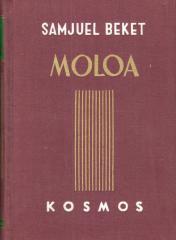
Moloa

Moloa

Samuel Beckett

The novel Molloy (1951) is the first part of Beckett's famous trilogy, along with Malone Dies and The Nameless. It is structured in two parts, each told from the perspective of a different narrator: first Molloy, then Jacques Moran.

Kosmos, 1959.
Srpski. Latinica. Tvrde korice.
8,46
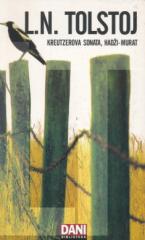
Kreutzerova sonata, Hadži-Murat

Kreutzerova sonata, Hadži-Murat

Lav Nikolajevič Tolstoj

Kreutzer's sonata belongs to those works of Tolstoy that the writer adapted in many ways to his view on moral issues, on marital morality above all.

Civitas, 2004.
Hrvatski. Latinica. Broširano.
4,983,74
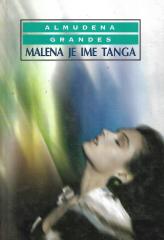
Malena je ime tanga

Malena je ime tanga

Almudena Grandes

If you like raw eroticism like Cloud Atlas, this is a sensual saga – emotional, provocative, for those who want to feel the pulse of forbidden passion! Grandes probes whether love is a curse or a liberation?

Mozaik knjiga, 2000.
Hrvatski. Latinica. Tvrde korice.
8,546,40
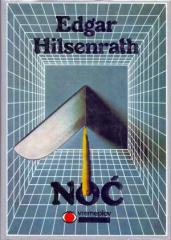
Noć

Noć

Edgar Hilsenrath

A poignant novel describing life in a Jewish ghetto in Ukraine, based on the author's experience as a Holocaust survivor. Set in the fictional town of Prokov, the novel follows the inhabitants of the ghetto, especially Raneko, as they struggle to survive.

August Cesarec, 1982.
Hrvatski. Latinica. Tvrde korice s ovitkom.
6,584,94
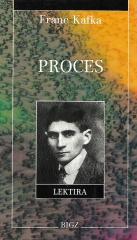
Proces

Proces

Franz Kafka

Kafka wrote The Process between 1914 and 1915, published posthumously in 1925. The novel is unfinished but with an added final chapter by Max Brod. Edition with a foreword by B. Živojinović and an afterword by Walter Killi.

BIGZ, 1990.
Srpski. Latinica. Broširano.
4,26
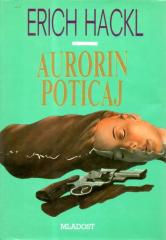
Aurorin poticaj

Aurorin poticaj

Erich Hackl

The work is based on a true event that occurred in Spain in 1933: Aurora Rodriguez killed her daughter Hildegart, a famous fighter for women's emancipation and a cult figure on the political scene of the time.

Mladost, 1990.
Hrvatski. Latinica. Tvrde korice s ovitkom.
4,96 - 4,98