Granica
Ein rares Buch

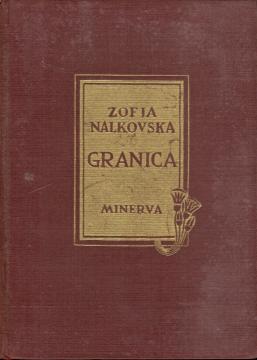
Granica

Zofia Nałkowska

Through the fate of the ambitious Zenon Ziembiewicz, the novel Granica depicts the transgression of moral, social and human boundaries – careerism, class differences and the price of compromise in interwar Polish society.

The Border (1935) is one of Zofia Nałkowska’s most significant works and the pinnacle of Polish psychological and social prose of the interwar period. The novel has a complex structure – it begins with the death of the main character Zenon Ziembiewicz, and then his life is reconstructed through retrospection.

Zenon Ziembiewicz, the son of an estate manager, is an ambitious and capable young man who quickly climbs the social ladder – from journalist to mayor. On the way to success, he crosses several “borders”: moral (betrays love and responsibility), class (exploits lower social classes) and human (loses inner purity). The story centers on two female characters: Elżbieta Biecka, a refined and cold member of the upper class, and Justyna Bogutówna, a poor, naive and emotional girl from the people whom Zenon seduces and abandons.

Nałkowska masterfully analyzes the mechanisms of careerism, the hypocrisy of bourgeois society, class divisions and moral relativity. The novel shows how an individual, in his pursuit of success and power, gradually loses the boundaries between good and evil, truth and lies, love and benefit. The criticism of patriarchal society and the fate of women in it is particularly strong.

The style is precise, psychologically deep and analytical, with elements of social satire. Nałkowska does not judge the characters directly, but rather depicts them in all their contradictions, leaving the reader to reflect on the limits of human action.

The Border is considered a classic of 20th-century Polish literature and an important testimony to the moral crisis of European civil society on the eve of World War II.

Übersetzung
Duša Perović
Editor
Tanasije Mladenović, Risto Tošović
Illustrationen
Nada Doroški
Titelseite
Stevan Vujkov
Maße
20 x 14 cm
Seitenzahl
306
Verlag
Minerva, Subotica, 1956.
 
Latein Schrift. Hardcover.
Sprache: Serbisch.

Angeboten wird ein Exemplar

Zustand:Gebraucht, in sehr gutem Zustand
Nachteile/Unannehmlichkeiten:
  • Traces of patina
Zum Warenkorb hinzugefügt!
 

Interessieren Sie sich für ein anderes Buch? Sie können das Angebot über unsere Suchmaschine suchen und finden oder Bücher nach Kategorien durchsuchen.

Diese Titel könnten Sie auch interessieren

Devojka i golubovi

Devojka i golubovi

Jaroslaw Iwaszkiewicz

Young Edek lives with his elderly father who tries to keep his son by his side. The boy's longing for freedom and a girl clashes with his father's possessiveness. The pigeons symbolize unattainable freedom. The conflict leads to a tragic ending.

Svjetlost, 1965.
Serbisch. Latein Schrift. Taschenbuch.
2,14
Hronika o siromašnim ljubavnicima

Hronika o siromašnim ljubavnicima

Vasco Pratolini

In Florence 1925–1926, in the poor Via del Corno, the residents live in love, poverty and fear. The arrival of fascism destroys the community: lovers fight, some die from violence, but popular solidarity survives.

Svjetlost, 1966.
Serbisch. Latein Schrift. Taschenbuch.
Das Buch besteht aus zwei Bänden
4,56
Dani jada i glada

Dani jada i glada

Ivan Softa

A novel by Ivan Softa about life in a Herzegovinian village during World War I. It realistically and poignantly depicts misery, hunger, disease, war mobilization, and the suffering of peasants, condemning war and social injustices.

Matica hrvatska, 1937.
Kroatisch. Latein Schrift. Hardcover.
9,72 - 11,34
Feminist: roman iz nedavne prošlosti

Feminist: roman iz nedavne prošlosti

Velimir Deželić-Sin

A social novel with a thesis, which follows a young intelligent woman who fights for education, independence and equality in the conservative society of the 1920s, advocating for women's emancipation and financial independence.

Hrvatsko književno društvo Sv. Jeronima, 1930.
Kroatisch. Latein Schrift. Hardcover.
17,2612,08
Žena koja je slikala kanom

Žena koja je slikala kanom

Alka Joshi

"The Woman Who Painted with Henna" is the debut novel of Indian-American author Alka Joshi, the first part of the Jaipur trilogy. The novel has been praised for its authentic portrayal of Rajasthani culture and the universal theme of female emancipation.

Mozaik knjiga, 2021.
Kroatisch. Latein Schrift. Taschenbuch.
13,22
Blato

Blato

Milana Vlaović

Miana Vlaović's debut novel is a story about three generations of women in a patriarchal province, filled with recurring patterns of fate - love, betrayal, poverty, violence, and small struggles for dignity.

V.B.Z, 2007.
Kroatisch. Latein Schrift. Taschenbuch.
6,38