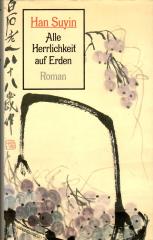
Dvije žene iz Kine: Dudinja i Breskva

Dvije žene iz Kine: Dudinja i Breskva

Hualing Nieh

The novel follows the fate of a young Chinese woman, Dudinja, who flees war and revolution in China in the 1940s and 1950s. The novel, banned in China for its political and sexual themes, explores trauma and schizophrenia through the story of Dudinja deve

The story unfolds in four parts, combining the diary entries of Dudinja and the letters of Peach to an American immigration officer.

During World War II, the adolescent Dudinja flees the Japanese invasion, caught on a boat on the Yangtze River. Later, in Beijing, she faces the communist revolution, and after fleeing to Taiwan, she hides with her husband, accused of embezzlement, in an attic, where their daughter develops a fantasy world. In the final part, Dudinja arrives in the United States, persecuted by the immigration service. There, Peach appears, her rebellious, sexually liberated persona, who rejects her Chinese roots and ridicules Dudinja.

The novel combines historical allegory, political satire, and a feminist perspective, exploring cultural dislocation and psychological fragmentation. Nieh depicts the struggle between traditional values and modernization with humor and irony, making the work significant in the context of Chinese and immigrant literature.

Naslov izvornika
Two Women of China
Prijevod
Mate Maras
Urednik
Mirjana Buljan
Dimenzije
21 x 14 cm
Broj strana
258
Nakladnik
Globus, Zagreb, 1985.
 
Latinica. Tvrde korice s ovitkom.
Jezik: Hrvatski.

Dva primjerka su u ponudi

Primjerak broj 1

Stanje:Korišteno, u odličnom stanju
Dodano u košaricu!

Primjerak broj 2

Stanje:Korišteno, u odličnom stanju
Dodano u košaricu!
 

Zanima Vas i neka druga knjiga? Možete pretražiti našu ponudu pomoću tražilice ili prelistati knjige po kategorijama.

Možda će Vas zanimati i ovi naslovi

Ta slatka mučnina

Ta slatka mučnina

Patricia Highsmith

The novel That Sweet Nausea (1960) delves into the dark depths of obsession and duality. Highsmith masterfully dissects the boundaries between love and madness, creating a tense portrait of a man trapped in his own lies, where illusion crumbles under the

Pegaz, 1997.
Hrvatski. Latinica. Broširano.
3,48
Ljubavnik

Ljubavnik

Marguerite Duras

An autobiographical novel by Marguerite Duras, told in fragmentary, poetic prose. Set in colonial Indochina in the 1920s, it follows a poor fifteen-year-old French girl who begins a passionate love affair with a wealthy Chinese merchant.

Jutarnji list, 2004.
Hrvatski. Latinica. Tvrde korice s ovitkom.
2,34 - 2,99
Gorski vijenac

Gorski vijenac

Petar II Petrović Njegoš

In Gorski vijenac, Njegoš sings about the "investigation of the wanderers", an event that allegedly took place in Montenegro at the end of the seventeenth century, but about which there is no reliable data in historical science.

Školska knjiga, 1974.
Hrvatski. Latinica. Broširano.
3,98
Prolećne vode

Prolećne vode

Ivan Sergejevič Turgenjev
Nolit, 1974.
Srpski. Latinica. Tvrde korice.
3,26
Slavuji i šišmiši

Slavuji i šišmiši

Mirko Božić

„Slavuji i slepi miševi“ (1990), poslednji roman Mirka Božića, smešta radnju u urbano okruženje riječkog pozorišta u ranim posleratnim godinama. Ovaj „roman sa ključem“ suptilno evocira ličnosti iz stvarnog života, poput Miroslava Krleže i Vladimira Baka

Znanje, 1990.
Hrvatski. Latinica. Tvrde korice s ovitkom.
5,42
Fiškal / Među žabarima

Fiškal / Među žabarima

Ante Kovačić

„Fiškal“ je roman Ante Kovačića, koji se bavi temama identiteta, društvenih promjena i sukoba tradicije i savremenosti.

Mladost, 1978.
Hrvatski. Latinica. Tvrde korice s ovitkom.
5,32