Gospodin G.A. u gradu X
Retka knjiga

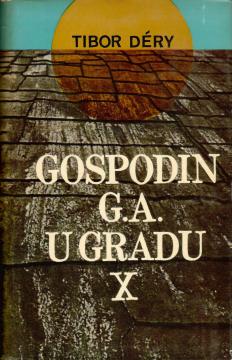
Gospodin G.A. u gradu X

Tibor Dery

Mr. G.A. in the City of X by Tibor Déry is a Kafkaesque dystopia about a man who arrives in a perfect city where everything is permitted, but precisely because of that, nothing has meaning or value anymore.

Mr. G.A. in the City of X (1964) is one of the most significant works of the Hungarian writer Tibor Déry (1894–1977). The novel was written in prison, where the author was imprisoned for participating in the Hungarian Revolution of 1956, and is considered the pinnacle of his late oeuvre and an excellent satire on totalitarian societies.

The main character, Mr. G.A., arrives in the mysterious city of X – a seemingly ideally arranged place where complete freedom reigns. Residents can do whatever they want, there are no prohibitions, no scarcity, no coercion. But it is precisely this absolute freedom that leads to absurdity: without restrictions, meaning, motivation and the true joy of life also disappear. The city becomes a place of spiritual emptiness, boredom and dehumanization. Déry masterfully shows how utopia in practice becomes dystopia.

The novel is strongly Kafkaesque: an atmosphere of misunderstanding, bureaucratic absurdity and a sense of being trapped within a seemingly free system permeate the entire work. Déry uses irony, grotesque and philosophical depth to criticize not only the socialist system of his time, but also more broadly – ​​any ideology that promises perfection. Many have seen the novel as a mirror of real socialism, but the work has universal value and is read today as a criticism of contemporary consumerism and “freedom” in which everything is permitted and nothing else matters.

The style is elegant, precise and introspective. Déry does not offer simple answers, but asks deep questions about the nature of freedom, happiness, the meaning of existence and the limits of human community. The novel is extremely dense – every sentence carries a multi-layered meaning.

Mr. G.A. in the city of X is a masterpiece of 20th-century Hungarian literature and an outstanding example of intellectual prose that combines literary value with sharp social criticism.

Naslov originala
G. A. úr X.-ben
Prevod
Jadranka Damjanov
Urednik
Kalman Mesarić
Naslovnica
Boris Dogan
Dimenzije
20,5 x 13 cm
Broj strana
486
Izdavač
Naprijed, Zagreb, 1967.
 
Latinica. Tvrde korice s omotom.
Jezik: Hrvatski.

Jedan primerak je u ponudi

Stanje:Nekorišćeno
Dodato u korpu!
 

Zanima Vas i neka druga knjiga? Možete pretražiti našu ponudu pomoću pretrage ili prelistati knjige po kategorijama.

Možda će Vas zanimati i ovi naslovi

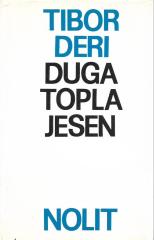
Duga topla jesen

Duga topla jesen

Tibor Dery

Tibor Dérys Roman „Der lange warme Herbst“ ist ein intimer Roman über das Alter, der sich mit dem unaufhaltsamen Verfall von Körper und Geist und den letzten Versuchen, dem unausweichlichen Tod zu entfliehen, auseinandersetzt.

Nolit, 1989.
Srpski. Latinica. Tvrde korice s omotom.
9,907,43
Ljudi

Ljudi

Pal Szabo

"People" by Pál Szab is a romanticized chronicle of a rural community in which, through everyday life, conflicts, work, and interpersonal relationships, the moral strength, weaknesses, and constant struggle of man for dignity are depicted.

Naklada Binoza, 1932.
Hrvatski. Latinica. Tvrde korice s omotom.
5,62
Njezin bijeli vijenac

Njezin bijeli vijenac

Margareta Csaba

Katolička odgojna knjiga za djevojke pred sklapanjem braka. Nastavljajući teme iz „Njezina proljeća“, autorica govori o zrelosti, ljubavi, ženidbi, majčinstvu i kršćanskom obiteljskom životu.

SPES, 1940.
Hrvatski. Latinica. Broširano.
5,62
Veliki vrisak: Roman jedne mlade žene

Veliki vrisak: Roman jedne mlade žene

Renée Erdős

Eine intime und emotionale Geschichte über junge Frauen, ihre Lieben, Leidenschaften, Enttäuschungen und inneren Kämpfe in der ungarischen bürgerlichen Gesellschaft zu Beginn des 20. Jahrhunderts.

Zabavna biblioteka - Naklada tiskare Narodnih novina, 1926.
Hrvatski. Latinica. Tvrde korice.
6,54
Samrtno proljeće

Samrtno proljeće

Lajos Zilahy

Ein junger Diplomat kehrt am Boden zerstört über die Trennung von seiner geliebten Frau aus Barcelona zurück. Und doch lernt er bald eine neue Liebe kennen. Doch als er diese Beziehung mit der Heirat krönen will, kehrt seine ehemalige Freundin zurück.

Zora, 1955.
Hrvatski. Latinica. Tvrde korice s omotom.
2,64
Knjiga o Hrabalu

Knjiga o Hrabalu

Péter Esterházy

Die Hauptfigur dieses Romans ist Anna, eine Frau mit drei Kindern und Ehemann als Schriftstellerin, die davon besessen ist, ein Buch über den tschechischen Geschichtenerzähler Bohumil Hrabal zu schreiben.

Dereta, 2001.
Srpski. Ćirilica. Broširano.
4,52