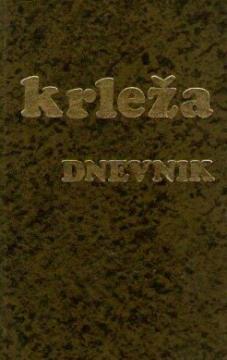
Dnevnik 2: Dnevnik 1918-22 (Davni dani II)

Dnevnik 2: Dnevnik 1918-22 (Davni dani II)

Miroslav Krleža

The Diary 1918–22 records Krleža's writings from the post-war years marked by the collapse of the Monarchy, the emergence of a new state, political fractures, and his increasingly harsh criticism of society, intellectuals, and ideological illusions.

Diary 1918–22 (Old Days II) continues the autobiographical arc begun in the war records, but now in a completely different atmosphere – in the years of turbulent post-war, revolutions, state reorganizations and profound social changes. In this diary, Krleža observes a time in which the collapse of Austria-Hungary brings a sense of freedom, but also disappointment: instead of the expected creation of a new, more just world, old patterns of power, nationalisms, political showdowns and ideological deviations appear on the scene.

The records reflect Krleža's disappointment with intellectuals who, instead of moral engagement, choose compromises and adaptation. He harshly comments on the petty-bourgeois mentality, cultural provincialism and the inability of society to face its own past. His blade is particularly pointed towards political illusions: Bolshevism as an ideal that is transformed into a repressive practice, as well as Yugoslav unitarism that creates new tensions. Krleža remains left-wing, but deeply critical of all forms of dogma and ideological blindness.

At the same time, Diary reveals his inner struggle. This is a period of personal and artistic searching, in which he records doubts about his own creativity, sketches future literary projects, and ponders the meaning of literature in a world full of violence and nonsense. The style is dense, fragmentary, full of intellectual associations and deeply emotional tones – a combination of historical reflection and introspective nakedness.

Krleža records the everyday life of Zagreb and the new state: political speeches, cafe conversations, cultural clashes, empty promises of revolutionary programs. One can feel the fatigue of a generation that expected social upheaval, but welcomed a new bureaucracy and old hypocrisy under new names. This is precisely why Diary 1918–22 carries a strong critical note: it is not just a personal note, but a testimony to an epoch in which idealism breaks under the weight of reality.

This book is a key document for understanding Krleža's worldview: his doubt, his moral unrest, and his obsession with truth. Davni dani II shows how one of the most important writers of the Yugoslav space was formed in the years when history was fractured – and how this fracture shaped his literature.

Urednik
Enes Čengić, Anđelko Malinar
Dimenzije
20 x 13 cm
Broj strana
459
Nakladnik
NIŠRO Oslobođenje, Sarajevo, 1981.
 
Latinica. Tvrde korice.
Jezik: Hrvatski.

Jedan primjerak je u ponudi

Stanje:Korišteno, u odličnom stanju
Snižena cijena: 6,785,09
Popust od 25% vrijedi do 07.06.2026. 23:59
Dodano u košaricu!
 

Zanima Vas i neka druga knjiga? Možete pretražiti našu ponudu pomoću tražilice ili prelistati knjige po kategorijama.

Možda će Vas zanimati i ovi naslovi

Izabrane pjesme

Izabrane pjesme

Miroslav Krleža

Ovaj izbor Krležinih pjesma presjek je njegove cjelokupne poezije (osim Simfonija i Balada Petrice Kermpuha), uključujući i stihove koji čine sastavni dio širih proznih cjelina čime se pokušala naglasiti povezanost Krležine poezije i proze.

Matica hrvatska, 1963.
Hrvatski. Latinica. Tvrde korice s ovitkom.
9,997,49
Povratak Filipa Latinovicza

Povratak Filipa Latinovicza

Miroslav Krleža

Povratak Filipa Latinovicza jedan je od najpoznatijih romana Miroslava Krleže. Ovaj roman značajan je u našoj književnosti jer se smatra prvim hrvatskim u potpunosti modernim romanom.

Večernji list, 2004.
Hrvatski. Latinica. Tvrde korice s ovitkom.
5,524,16 - 5,56
Hrvatski bog Mars

Hrvatski bog Mars

Miroslav Krleža

Hrvatski bog Mars donosi sedam antiratnih romana u kojima Krleža prikazuje rat kao surovu, besmislenu mašineriju koja uništava „malog čoveka“, razotkrivajući licemerje militarizma i mitove o herojstvu.

Rad, 1965.
Srpski. Latinica. Broširano.
1,99
Antidnevnik prisjećanja: Pogled unatrag i unaprijed

Antidnevnik prisjećanja: Pogled unatrag i unaprijed

Vladimir Devidé

Vladimir Devidé, hrvatski matematičar, japanolog i esejist, u Antidnevniku prisjećanja stvara intimnu, fragmentarnu autobiografiju kroz dvadesetak tekstova – eseja, priča, humornih i satiričkih članaka, putopisa, refleksija i maštarija.

Znanje, 1995.
Hrvatski. Latinica. Broširano.
11,26
Danilo Kiš. Žamor povijesti

Danilo Kiš. Žamor povijesti

Mark Thompson

Danilo Kiš. Žamor povijesti Marka Thompsona istražuje život i djelo Danila Kiša kroz šest iznimnih eseja, spajajući književnost i povijest.

Fraktura, 2021.
Hrvatski. Latinica. Tvrde korice s ovitkom.
12,36
Primicanje katastrofa: Propasti koje prijete našem svijetu

Primicanje katastrofa: Propasti koje prijete našem svijetu

Isaac Asimov

Znanstveno-popularno djelo u kojem Asimov, kombinirajući znanstvenu rigoroznost s lucidnim stilom istražuje moguće prijetnje opstanku čovječanstva, sistematizirajući katastrofe prema njihovoj prirodi i vjerojatnosti.

August Cesarec, 1981.
Hrvatski. Latinica. Tvrde korice s ovitkom.
7,46