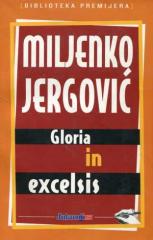
Gloria in excelsis

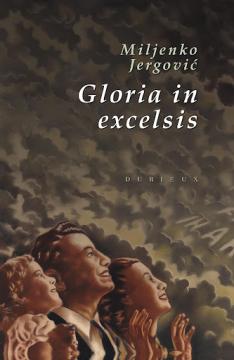
Gloria in excelsis

Miljenko Jergović

The novel intertwines three stories by three narrators, separated by centuries but connected by Bosnian destiny and memory. The complex structure uses chronicler style, orality, and fantasy, subverting the linear flow of time through interpolations and dr

First story: Kreševo ​​Chronicle (1765–1766). Friar Marijan Bogdanović, Franciscan chronicler of the monastery of St. Catherine in Kreševo, records the three-year reconstruction after a fire under Turkish rule. The language imitates Andrić's orality: seasons, traditions, superstitions (dreams of Šimun Paškvan, a supernatural oak tree). Characters like Ivan Gašparov Slavnić wander without memory; Friar Marijan struggles with rationality against the irrational, emphasizing the multiculturalism of Bosnia.

Second story: Zagreb Diary (1945). Željko Ćurlin, an RAF pilot of Yugoslav origin, spends four months in post-war Zagreb after the bombing of Sarajevo. Paranoia, shame before Koča Popović, encounters with Stepinac and agent Čajkanović dissolve illusions (the bomb on Sarajevo, his role in the crimes of the NDH). Episodes include Uncle Amidža Pepi and multiple versions of death; culminates in suicide, exploring the Titoist takeover and the relativization of evil.

Third story: Sarajevo Shelter (April 2, 1945). Šimun Paškvan, a retired accountant and bunker locksmith, narrates 80 minutes of panic during the Allied bombing. The language of the lower class: gamblers with unsolved crimes, Ustasha camp inmate Skorvatzy, Luburić as a figure of evil (discovery of hidden Jews). The key symbolizes the power of closing/opening; the bomb brings an apocalypse without salvation.

The stories are connected through the Paškvan family – metallurgical craft, mythical destiny, leaping centuries – and the motifs of the key, dream, fire. Themes: Bosnian melancholy, occupations (Turkish, Ustasha, Titoist), the transition of faith into conviction, coincidence versus logic, the disappearance of patience. The novel, as a mosaic-chronicle, announces death without messianic salvation, celebrating the "Gloria in excelsis" in the chaos of history.

Dimenzije
20,5 x 13,5 cm
Broj strana
538
Nakladnik
Durieux, Zagreb, 2006.
 
Latinica. Tvrde korice s ovitkom.
Jezik: Hrvatski.
ISBN
978-9-53188-237-8

Jedan primjerak je u ponudi

Stanje:Korišteno, u odličnom stanju
Dodano u košaricu!
 

Zanima Vas i neka druga knjiga? Možete pretražiti našu ponudu pomoću tražilice ili prelistati knjige po kategorijama.

Možda će Vas zanimati i ovi naslovi

Gloria in excelsis

Gloria in excelsis

Miljenko Jergović
Jutarnji list, 2005.
Hrvatski. Latinica. Broširano.
4,56 - 4,98
Sarajevski Marlboro

Sarajevski Marlboro

Miljenko Jergović

A collection of 29 short stories depicting the everyday life of the inhabitants of Sarajevo during the war. The author portrays the reality of war without pathos, focusing on small details that reflect human resilience and the complexity of life in extrem

Jutarnji list, 2004.
Hrvatski. Latinica. Tvrde korice s ovitkom.
4,88 - 5,20
Historijska čitanka 1

Historijska čitanka 1

Miljenko Jergović

Das Kultbuch von Miljenko Jergović – eine subjektive Geschichte einer Zeit, eines Landes und einer Stadt... Ein historischer Leser ist eigentlich ein Familienalbum, denn man lernt damit immer Menschen aus einer vergangenen Zeit kennen, die man erklären mö

V.B.Z, 2006.
Hrvatski. Latinica. Broširano.
6,22
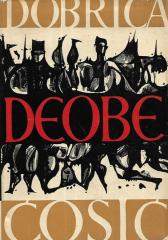
Deobe

Deobe

Dobrica Ćosić

„Deobe“ ist ein Roman über die tragische Spaltung der Serben in Tschetniks und Partisanen während des Zweiten Weltkriegs. Der mit dem NIN-Preis ausgezeichnete Roman ist Teil einer größeren epischen Trilogie, die von Ćosićs Erfahrungen und historischen Dok

Prosveta, 1963.
Hrvatski. Latinica. Tvrde korice s ovitkom.
13,74
Očevi i kćeri

Očevi i kćeri

Robert Hellenga
Mozaik knjiga, 2000.
Hrvatski. Latinica. Tvrde korice.
3,99
Mickiewicz

Mickiewicz

Mieczyslav Jastrun

Das Buch „Mickiewicz“ von Mieczysław Jastrun ist ein biografisches Werk über Adam Mickiewicz, einen der berühmtesten polnischen Dichter und Nationalhelden.

Zora, 1950.
Hrvatski. Latinica. Tvrde korice.
4,98