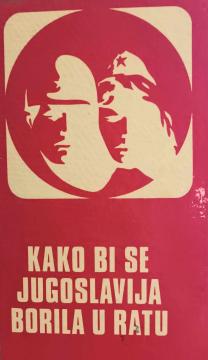
Kako bi se Jugoslavija borila u ratu

Kako bi se Jugoslavija borila u ratu

Luka Despenjić

How Yugoslavia would fight in the war, brings an interesting insight into the military strategies and tactics of that time.

If you are interested in learning more about how military strategists and soldiers prepared for potential conflicts, this book may provide some interesting insight.

Editor
Mensur Seferović
Graphics design
Aleksandar Švedić
Dimensions
20.5 x 12.5 cm
Pages
189
Publisher
Narodna armija, Beograd, 1973.
 
Distribution: 10,000 copies
 
Latin alphabet. Hardcover.
Language: Croatian.

One copy is available

Condition:Used, excellent condition
Damages or inconvenience notice:
  • Library stamp
 

Are you interested in another book? You can search the offer using our search engine or browse books by category.

You may also be interested in these titles

Izabrani radovi

Izabrani radovi

Ljubo Boban

Selected Works of Academician Ljubo Boban (2022) brings together key texts on contemporary Croatian history of the 20th century. The foreword by Damir Agičić highlights Boban's methodological rigor and objectivity in researching sensitive topics.

Srednja Europa, 2022.
Croatian. Latin alphabet. Hardcover.
24.52
Historija porodice Alibegović: transformacija iz begovske zemljoposjedničke u modernu građansku porodicu

Historija porodice Alibegović: transformacija iz begovske zemljoposjedničke u modernu građansku porodicu

Husnija Kamberović

The book depicts the development of a Bosnian bey family that, throughout the 19th and 20th centuries, transformed from a landowning family into a modern bourgeois family, reflecting broader social changes in Bosnia and Herzegovina.

Udruženje za modernu historiju (UMHIS), 2021.
Croatian. Latin alphabet. Paperback.
18.52
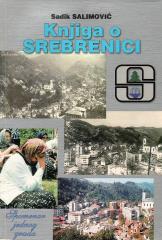
Knjiga o Srebrenici – spomenar jednog grada

Knjiga o Srebrenici – spomenar jednog grada

Sadik Salimović

Sadik Salimović's Book of Srebrenica (2002) is a memoir of the city: from Ottoman settlement, Islamization and development to the war suffering of 1992–1995 and genocide. It preserves the identity and memory of life before and after the tragedy.

Skupština opštine Srebrenica, 2002.
Croatian. Latin alphabet. Paperback.
11.32
Titostalgija

Titostalgija

Mitja Velikonja

The author explores why Tito remains a popular symbol of stability, social security and independence, despite critical views of his regime. The book maps the cultural, political and everyday manifestations of "Titostalgia".

Biblioteka XX vek, 2010.
Serbian. Latin alphabet. Paperback.
7.36
Dobri ljudi u vremenu zla

Dobri ljudi u vremenu zla

Svetlana Broz

The book Good people in the time of evil (1999) by Svetlana Broz is a collection of true stories from the war in Bosnia and Herzegovina (1992-1995), which bear witness to the humanity, solidarity and moral courage of individuals in the midst of conflict.

Media centar "Prelom", 2001.
Croatian. Latin alphabet. Paperback.
12.36
Snažan eho brionski: Odjeci Brionskog plenuma u Bosni i Hercegovini 1966. godine

Snažan eho brionski: Odjeci Brionskog plenuma u Bosni i Hercegovini 1966. godine

Amir Duranović

Amir Duranović's book reconstructs in detail the dramatic year 1966 and the Fourth (Brion) Session of the Central Committee of the Communist Party of Yugoslavia (July 1–2, 1966), at which Aleksandar Ranković, the long-time head of the UDB and vice preside

Udruženje za modernu historiju (UMHIS), 2017.
Croatian. Latin alphabet. Paperback.
9.54