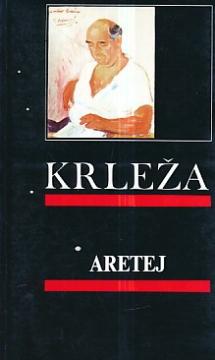
Aretej

Aretej

Miroslav Krleža

Krleža's drama about the doctor Areteus, a humanist who opposes the fanaticism, dogma and cruelty of society. The drama depicts the tragic position of an individual who remains faithful to reason in a world that rejects him.

In the play Aretêj, Miroslav Krleža creates a powerful portrait of the doctor Aretêj of Cappadocia, a man who, despite the chaos of the world around him, stubbornly adheres to an ethical principle: to save a person, regardless of their class, religion or political affiliation. The action is set in the late Roman Empire, during the persecution of Christians, social turmoil and moral decay. It is this historical framework that serves Krleža as a mirror of modernity — a dramatic portrayal of a man who remains committed to knowledge and humanity while the world surrenders to hatred and irrationality.

Aretêj finds himself between two fires: the Roman authorities, cruel and pragmatic, and the Christian communities that, although persecuted, show their own intolerance. His desire to help everyone brings him into conflict with both. At the heart of the play is his belief that a person is valuable for the very fact that he is a person, and not for belonging to a group. This is why the systems of power see him as a threat.

In Aretei, Krleža combines lyricism and thought: in his monologues one can feel the weariness of a man who sees the decline of values, but also the firm conviction that “a doctor must never stop healing”. The fate of the sick, wounded and rejected is depicted in dramatic scenes, and Aretei among them remains the last point of humanity.

Aretei is at the same time a historical picture and a philosophical drama, one of the highlights of Krleža's tragic literature. Through the fate of an individual who does not agree to hatred and ideological blindness, Krleža builds a universal story about resistance, moral responsibility and the price paid by a man who refuses to give up on good.

Editor
Miroslav Prstojević
Illustrations
Petar Dobrović
Graphics design
Hrvoje Malić
Dimensions
19.5 x 12 cm
Pages
211
Publisher
NIŠRO Oslobođenje, Sarajevo, 1988.
 
Latin alphabet. Paperback.
Language: Croatian.
ISBN
8-63-190135-0

Two copies are available

Copy number 1

Condition:Used, excellent condition
Discounted price: 5.264.21
20% discount is valid until 5/19/26 11:59 pm

Copy number 2

Condition:Used, excellent condition
Discounted price: 5.243.93
25% discount is valid until 5/19/26 11:59 pm
 

Are you interested in another book? You can search the offer using our search engine or browse books by category.

You may also be interested in these titles

Izabrane pjesme

Izabrane pjesme

Miroslav Krleža
Matica hrvatska, 1963.
Croatian. Latin alphabet. Hardcover with dust jacket.
9.99
Povratak Filipa Latinovicza

Povratak Filipa Latinovicza

Miroslav Krleža

The Return of Filip Latinovicz is one of Miroslav Krleža's most famous novels. This novel is significant in our literature because it is considered the first fully modern Croatian novel.

Večernji list, 2004.
Croatian. Latin alphabet. Hardcover with dust jacket.
5.52 - 5.56
Hrvatski bog Mars

Hrvatski bog Mars

Miroslav Krleža

The Croatian god Mars brings seven anti-war novels in which Krleža portrays war as a cruel, senseless machinery that destroys the "little man", exposing the hypocrisy of militarism and myths about heroism.

Rad, 1965.
Serbian. Latin alphabet. Paperback.
1.99
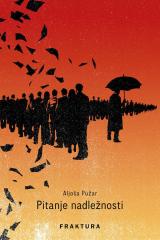
Pitanje nadležnosti: etnografske pjesme

Pitanje nadležnosti: etnografske pjesme

Aljoša Pužar

Aljoša Pužar's The Question of Jurisdiction is a collection of poetry that dissects urban everyday life – between clinics, stations, and social networks, the poet observes and writes down a diagnosis of today, where poetry tries to survive.

Fraktura, 2024.
Croatian. Latin alphabet. Hardcover with dust jacket.
9.58
Slike Marijine

Slike Marijine

Lydia Scheuermann-Hodak
Vlastita naklada, 1999.
Croatian. Latin alphabet. Paperback.
4.98
Četiri i po drame

Četiri i po drame

Almir Bašović

This is a collection that begins with a part of the genocide in Srebrenica, and ends with a monologue of war criminals, in which Bašović opens and closes the cycle of the war curse.

Connectum, 2018.
Croatian. Latin alphabet. Paperback.
7.84