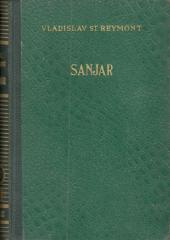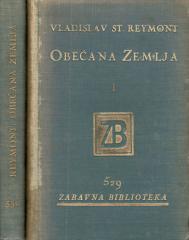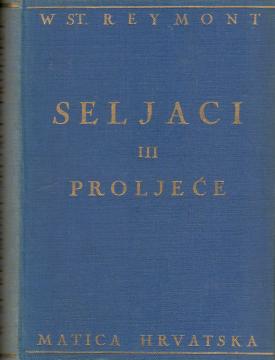
Seljaci III: Proljeće
The third part of the epic tetralogy The Peasants. Spring brings the awakening of nature, but also new conflicts in the village of Lipce: the culmination of a love triangle, family drama and social tensions. The continuation of Nobel's epic of Polish peas
The third volume of the great tetralogy Peasants (Chłopi), for which Reymont received the Nobel Prize for Literature in 1924. The translation from Polish, as with the previous parts, was made by Julije Benešić.
The plot of Spring takes place in the village of Lipce when nature awakens after a long winter. The snow melts, the fields are prepared for sowing, and the village slowly emerges from its winter dormancy. However, the awakening of nature is accompanied by the awakening of old conflicts. The love triangle between Maciej Boryna, his son Antko, and the beautiful Jagna reaches its peak. The passionate relationship between Antko and Jagna can no longer be hidden, which leads to difficult family dramas, gossip, and the growing resistance of the entire village towards Jagna.
In this part, Reymont even more strongly depicts the social tensions in the village: the struggle for land, conflicts between generations, the attitude of the peasants towards the landlords, and the role of women in a patriarchal society. Hanka, Antek's wife, undergoes a powerful transformation – from an oppressed woman she transforms into a determined mother and mistress fighting for the future of her children.
Spring is more dynamic and dramatic than the previous parts. Nature here symbolizes renewal and hope, but at the same time emphasizes the cyclicality of life in which passions, greed and conflicts are constantly repeated. Reymont masterfully combines epic descriptions of spring work, the awakening of the earth and natural forces with intimate human tragedies.
Benešić's translation retains all the power and richness of the original – the peasant language, the rhythm of nature and the collective strength of the village as the main character. The novel shows the peak of Reymont's naturalism and realism, but also a deep poetic dimension.
Spring prepares the culmination of the entire tetralogy that follows in Summer. The tetralogy Peasants is considered one of the most impressive epic depictions of peasant life in world literature – a universal image of man, community and nature.
A copy is available as part of the book set "Seljaci I-IV"
Browse the set
1. Seljaci I: Jesen
The first part of an epic tetralogy about the life of a Polish rural community in the village of Lipce. The novel depicts the rhythm of rural work, everyday life, intrigues, conflicts over land and power, and the marriage of the old, wealthy peasant Macie
- Cracked back
2. Seljaci II: Zima
The second part of the epic tetralogy Peasants. The novel depicts the difficult winter life in the village of Lipce, deepens the conflicts within Boryna's family, the passionate relationship between Antko and Jagna, and the growing tensions in the village
3. Seljaci III: Proljeće
The third part of the epic tetralogy The Peasants. Spring brings the awakening of nature, but also new conflicts in the village of Lipce: the culmination of a love triangle, family drama and social tensions. The continuation of Nobel's epic of Polish peas
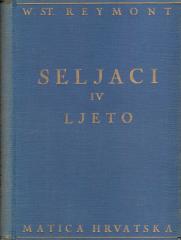
4. Seljaci IV: Ljeto
Peasants IV: Summer is the final and most powerful part of the epic tetralogy Peasants. The culmination of the conflict in the village of Lipce during the hot summer and harvest, the drama surrounding Jagna, the death of Maciej Boryna and the final closin
One copy is available
- Worn covers