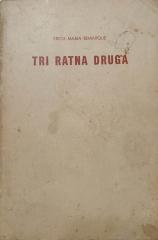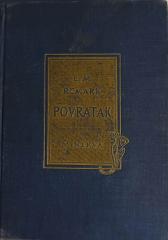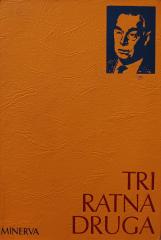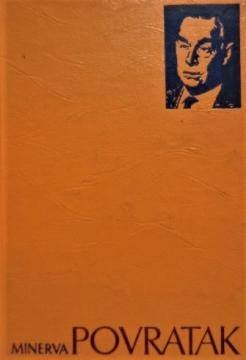
Povratak
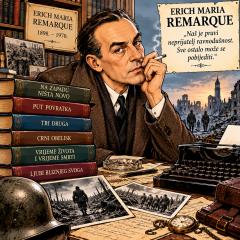
The novel follows soldiers who return to a devastated and politically unstable Germany after the First World War. Faced with trauma and the impossibility of fitting into civilian life, they realize that the war has remained in them forever.
As a sequel to the famous novel All Quiet on the Western Front, The Return explores the fate of the same group of young men whose youth was destroyed by the trench massacre. Here, Erich Maria Remarque does not celebrate the victors of the war, but dissects the painful reality of people whose future was taken away. Returning home does not bring peace, but the bitter realization that the soldiers have become strangers in their own country.
The main character Ernst Birkholz, together with his comrades such as Adolf Betke, Ludwig Brenk and Jutta, tries to find their place in a society steeped in hypocrisy, poverty, hunger and political unrest. Civilian institutions, schools and families seem to them like sterile backdrops that do not understand the horrors they have been through. The author masterfully depicts how the authorities who sent them to their deaths continue to have the upper hand, while the returnees struggle with PTSD, existential anxiety and shattered illusions.
The novel delves deeply into the psychology of the individual. Some soldiers turn to cynicism, others to political extremism that already foreshadows the coming fascism, while a few try to build fragile human bonds. The characters are permanently marked by the death of a friend, and many experience a final breakdown because they cannot adapt to the rhythm of peacetime.
Remarque's style is realistic, uncompromising and filled with deep humanism. Due to its strong anti-war charge and open pointing to the rot of society, the novel was later banned and burned by the Nazis. The Return remains a timeless testament to a lost generation and the lasting effects of every conflict on the human psyche.
Two copies are available
Copy number 2
- Slight damage to the cover