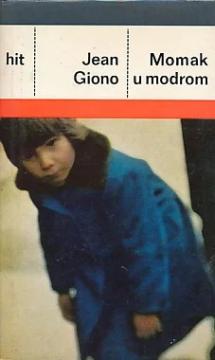
Momak u modrom

Momak u modrom

Jean Giono

The Boy in Blue is an autobiographical novel by Jean Gion about his childhood in Provence. Through memories of family, first friends, and nature, the author depicts the growth and formation of the future writer.

The Boy in Blue is one of the most personal novels by French writer Jean Giono. The work is strongly autobiographical and is based on the author's memories of his childhood in the small town of Manosque in Provence. The main character is a boy Jean, behind whom the author himself is easily recognized, and the novel follows his upbringing in a modest family during the first years of the 20th century.

Jean's parents play an important role in the novel. His father is a shoemaker, a quiet and hardworking man who spends much of his life at his desk, while his mother works as a laundress and supports the family with her own efforts. Through their daily efforts, the boy gets to know the world of work, poverty and dignity. Family relationships are depicted warmly and without idealization.

The plot is not built around a single plot, but through a series of episodes: children's games, walks in nature, meetings with neighbors, first fears, fantasies and discovering the world of adults. Particularly impressive are descriptions of Provence – hills, fields, wind and the scent of nature. For young Jean, nature is not just a backdrop but a space of freedom and imagination that shapes his outlook on life.

Through the boy's observations, Giono depicts the world of little people, their joys, sorrows and everyday struggles. The novel has no dramatic twists, but attracts with atmosphere and living characters. At the same time, it is a story about growing up, family and the emergence of a writer who finds inspiration for all his future work in ordinary people and landscapes.

Naslov izvornika
Jean le Bleu
Prijevod
Ana Kolesarić
Urednik
Zlatko Crnković
Naslovnica
Alfred Pal
Dimenzije
19,5 x 12,5 cm
Broj strana
221
Nakladnik
Znanje, Zagreb, 1982.
 
Latinica. Tvrde korice s ovitkom.
Jezik: Hrvatski.

Jedan primjerak je u ponudi

Stanje:Korišteno, u odličnom stanju
Dodano u košaricu!
 

Zanima Vas i neka druga knjiga? Možete pretražiti našu ponudu pomoću tražilice ili prelistati knjige po kategorijama.

Možda će Vas zanimati i ovi naslovi

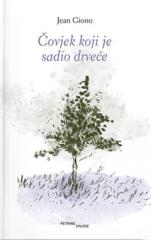
Čovjek koji je sadio drveće

Čovjek koji je sadio drveće

Jean Giono
Petrine knjige, 2022.
Hrvatski. Latinica. Broširano.
14,32
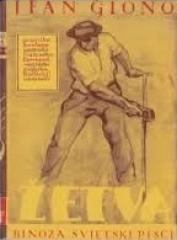
Žetva

Žetva

Jean Giono

In the abandoned Provençal village of Aubignane lives the recluse Panturle. The arrival of young Arsula changes his life and gradually brings life back to the village that was doomed to disappear. With a foreword by Josip Bogner.

Naklada Binoza, 1935.
Hrvatski. Latinica. Tvrde korice s ovitkom.
4,46 - 7,34
Dok vrijeme prolazi

Dok vrijeme prolazi

Michael Walsch

Michael Walsh's As Time Goes By continues and expands the story of the film Casablanca, following the fates of Rick, Ilsa and other characters during World War II through love, war and dangerous missions.

Znanje, 1999.
Hrvatski. Latinica. Broširano.
4,36
Imate li Ršuma?

Imate li Ršuma?

Ljubivoje Ršumović

Do You Have Ršum? is an autobiographical novel by Ljubivoje Ršumović about growing up, literary maturation, and dealing with one's own past. The work combines humor, poetry, irony, and a life confession.

Znanje, 1983.
Hrvatski. Latinica. Tvrde korice s ovitkom.
5,14 - 5,15
Eva Luna

Eva Luna

Isabel Allende

Eva Luna is a novel about a poor storyteller who weaves lives with words, written by Isabel Allende, the founder of Latin American magical realism. Published after the success of The House of the Spirits, this whirlwind of adventure combines love, revolut

Znanje, 1990.
Hrvatski. Latinica. Tvrde korice s ovitkom.
8,36
Balada o trubi i oblaku

Balada o trubi i oblaku

Ciril Kosmač

The Ballad of the Trumpet and the Cloud by Cirilа Kosmač is a story about courage, humanity, and resistance during World War II. Through the fate of an ordinary man, it shows the strength of conscience and sacrifice for others.

Znanje, 1977.
Hrvatski. Latinica. Tvrde korice s ovitkom.
2,89