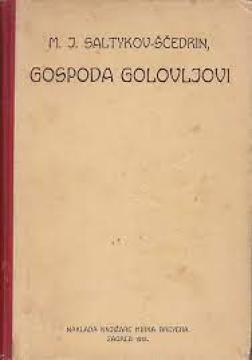
Gospoda Golovljovi
Rijetka knjiga
Antikvitet

Gospoda Golovljovi

Mihail E. Saltikov-Ščedrin

A rare and sought-after first Croatian edition of a classic of Russian literature. A masterpiece of satirical realism, it depicts the tragic story of the decline of the noble Golovlev family over several generations.

The novel is a profound and merciless critique of Russian society, especially the provincial nobility, false religiosity, hypocrisy, and greed. The author masterfully uses satire and irony to show the moral and material disintegration of a family whose members are trapped in a web of their own lies, greed, and mutual misunderstanding. The work is often considered the most powerful depiction of the “death of the soul” in Russian literature, where no one manages to escape the circle of hypocrisy and egoism.

The translation from the Russian by Isa Velikanović is considered a classic and very successful, and this Zagreb edition from 1918 represents an important part of the early translations of Russian classics into Croatian during the Austro-Hungarian Empire and World War I.

Today, this edition is a real rarity on the antiquarian market and is highly valued among collectors of Russian literature, lovers of realism, and literary historians. It represents not only a literary masterpiece, but also a valuable historical artifact of Croatian publishing from the beginning of the 20th century.

Naslov izvornika
Gospoda Golovlevy
Prijevod
Iso Velikanović
Dimenzije
21 x 14 cm
Broj strana
336
Nakladnik
Naklada knjižare Mirka Breyera, Zagreb, 1918.
 
Latinica. Tvrde korice.
Jezik: Hrvatski.

Dva primjerka su u ponudi

Primjerak broj 1

Stanje:Korišteno, u vrlo dobrom stanju
Specifičnost ovog primjerka:
Koričeno
Dodano u košaricu!

Primjerak broj 2

Stanje:Korišteno, u dobrom stanju (tragovi korištenja)
Specifičnost ovog primjerka:
Koričeno
Oštećenja / nepogodnosti:
  • Yellowed pages
  • Damaged back
  • Traces of patina
  • Cracked back
Dodano u košaricu!
 

Zanima Vas i neka druga knjiga? Možete pretražiti našu ponudu pomoću tražilice ili prelistati knjige po kategorijama.

Možda će Vas zanimati i ovi naslovi

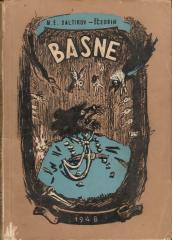
Basne

Basne

Mihail E. Saltikov-Ščedrin

A selection of satirical fables by Mikhail E. Saltykov-Shchedrin, through allegorical stories, ridicules the arbitrariness of government, bureaucracy, social injustices, and human weaknesses, with sharp humor and irony.

Pedagoško-književni zbor, 1948.
Hrvatski. Latinica. Broširano.
7,36
Šinjel i druge pripovijetke

Šinjel i druge pripovijetke

Nikolaj Gogolj

The story of Gogol is a story of tragic talent, mysticism and madness, of a manuscript that burned, of a nose and an overcoat, of an auditor and dead souls.

Civitas, 2004.
Hrvatski. Latinica. Broširano.
6,48
Sabrana djela A. P. Čehova #3: Drama u lovu i druge novele

Sabrana djela A. P. Čehova #3: Drama u lovu i druge novele

Anton Pavlovič Čehov

The third volume of Collected Works contains Chekhov's most extensive novella, "A Drama in Hunting," as well as a number of longer stories from the period 1885-1886. There are humoresques such as Silo in a Bag, Eh, That Audience, and A Lot of Paper, as we

Zora, 1959.
Hrvatski. Latinica. Tvrde korice s ovitkom.
8,74
Ruska šuma

Ruska šuma

Leonid Leonov

The novel follows Boris Kostomarov, an engineer in Soviet Russia, who, through conflicts with bureaucracy, moral questioning, and the fates of people in remote forests, reveals the complexity of Soviet society and the price of personal conscience.

Prosveta, 1960.
Srpski. Ćirilica. Tvrde korice s ovitkom.
6,36
Sabrana djela A. P. Čehova #5: Kaštanka i druge novele

Sabrana djela A. P. Čehova #5: Kaštanka i druge novele

Anton Pavlovič Čehov

The fifth book in a row of works by this great classic of Russian humor contains mainly his literary work from 1887. In this volume, the reader will find a number of already celebrated and well-known, as well as a large number of previously unpublished no

Zora, 1959.
Hrvatski. Latinica. Tvrde korice s ovitkom.
9,84
Poziv na pogubljenje

Poziv na pogubljenje

Vladimir Nabokov

There is no doubt that it is most attractive to read The Call to Execution as it appears to be written, as an anti-utopian or anti-totalitarian novel...

Nolit, 1988.
Srpski. Latinica. Tvrde korice s ovitkom.
12,32