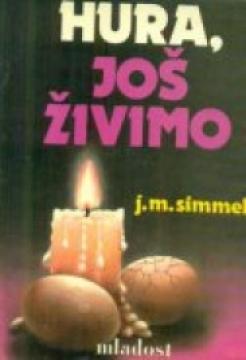
Hura, još živimo

Hura, još živimo

Johannes M. Simmel

The novel follows the life of Jakob Formann from 1946 to 1976: from a poor returnee from the war, through business ups and downs, love, marriages and scandals, to becoming one of the richest and most famous people in Germany.

Hurrah, we still live (1978) is one of the most popular novels by Johann Maria Simmel (1924–2009), an Austrian bestselling author known for his mixture of suspense, erotica, social satire and pacifism. This is a great family and social saga that follows three decades of post-war Germany through the life of the protagonist Jakob Formann.

Jakob returns from the war in 1946 poor, hungry and broken, but full of vitality and cynicism. He starts from scratch: he works illegally, engages in smuggling, enters into construction, advertising and media businesses. Thanks to cunning, charm and ruthlessness, he becomes a magnate - the owner of large companies, newspapers, TV companies. The novel depicts the German "economic miracle" (Wirtschaftswunder): a rapid rise from the ashes, but also moral compromises, corruption, suppression of the Nazi past and consumer hedonism.

Jakob's private life is turbulent: multiple marriages, mistresses, children, scandals. He is charismatic, restless, obsessed with sex and power, but also deeply unhappy - he carries the trauma of war, a guilty conscience and a sense of emptiness despite his wealth. Simmel uses Jakob's memories, dialogues and introspections to present a wider context: the reconstruction, the student riots of 1968, the Baader-Meinhof terrorism, changes in social morality.

The style is typical of Simmel: short chapters, a dynamic rhythm, lots of dialogue, eroticism and humor (often black). The novel is optimistic in its title ("Hurray, we still live!"), but critical of a society that has forgotten the lessons of war and lives in the illusion of prosperity.

Titel des Originals
Hurra, wir leben noch
Übersetzung
Oto Šolc
Editor
Zvonimir Majdak
Titelseite
Fadil Vejzović
Maße
20 x 14 cm
Seitenzahl
657
Verlag
Mladost, Zagreb, 1980.
 
Latein Schrift. Fester Einband mit Schutzumschlag.
Sprache: Kroatisch.

Angeboten wird ein Exemplar

Zustand:Gebraucht, in ausgezeichnetem Zustand
Zum Warenkorb hinzugefügt!
 

Interessieren Sie sich für ein anderes Buch? Sie können das Angebot über unsere Suchmaschine suchen und finden oder Bücher nach Kategorien durchsuchen.

Diese Titel könnten Sie auch interessieren

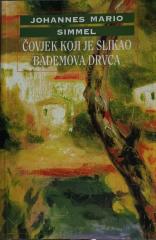
Čovjek koji je slikao bademova drvca

Čovjek koji je slikao bademova drvca

Johannes M. Simmel
Mozaik knjiga, 2001.
Kroatisch. Latein Schrift. Taschenbuch.
4,98
Čovjek koji je slikao bademova drvca

Čovjek koji je slikao bademova drvca

Johannes M. Simmel

The author's short novel in which he told the love story of the painter Pierre Mondragon, who captured the hearts of many women on the Cote d'Azur.

Mozaik knjiga, 2009.
Kroatisch. Latein Schrift. Taschenbuch.
3,68
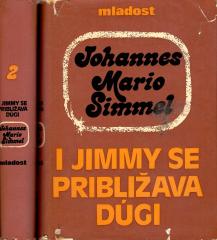
I Jimmy se približava dugi 1-2

I Jimmy se približava dugi 1-2

Johannes M. Simmel

A political and psychological drama set in Vienna between 1938 and 1969. Although inspired by real events from the West German metropolis between 1934 and 1965, the author changed the time and place of the action to protect the identities of real people.

Mladost, 1977.
Kroatisch. Latein Schrift. Fester Einband mit Schutzumschlag.
Das Buch besteht aus zwei Bänden
6,74 - 8,64
Kaiserove kulije: roman njemačke ratne mornarice

Kaiserove kulije: roman njemačke ratne mornarice

Theodor Plievier

The Kaiser's Coolies (1930) is an anti-militarist novel by Theodor Plievier. Based on his own experience, it depicts the brutal life of ordinary sailors in the German navy during World War I and the sailors' mutiny of 1917.

Naklada Binoza, 1934.
Kroatisch. Latein Schrift. Fester Einband mit Schutzumschlag.
5,26
Don Juan: Sedam smrtnih grijeha

Don Juan: Sedam smrtnih grijeha

Mirko Jelušić

In his novel Don Juan, Mirko Jelušić portrays the legendary seducer through the prism of the seven deadly sins. A modernized, psychological and erotic interpretation of Don Juan, full of passion, vices and internal conflicts.

Naklada Binoza, 1932.
Kroatisch. Latein Schrift. Fester Einband mit Schutzumschlag.
6,34
Crni Napoleon

Crni Napoleon

Karl Otten

The Black Napoleon (1931) is a fictional biography of Toussaint Louverture. It depicts the Haitian Revolution (1791–1803), the slave uprising in Saint-Domingue, Louverture's brilliant military and political rise, and his struggle against the colonial powe

Nakladni zavod Ante Velzek, 1940.
Kroatisch. Latein Schrift. Fester Einband mit Schutzumschlag.
6,32 - 14,56